Door and Lock Work for San Diego Breweries and Tasting Rooms
Commercial Lock & Door Co. services brewery and tasting room doors across San Diego County: taproom storefront entries, production floor man doors, cold box hardware, exit devices, and restricted master key systems for staff and deliveries.
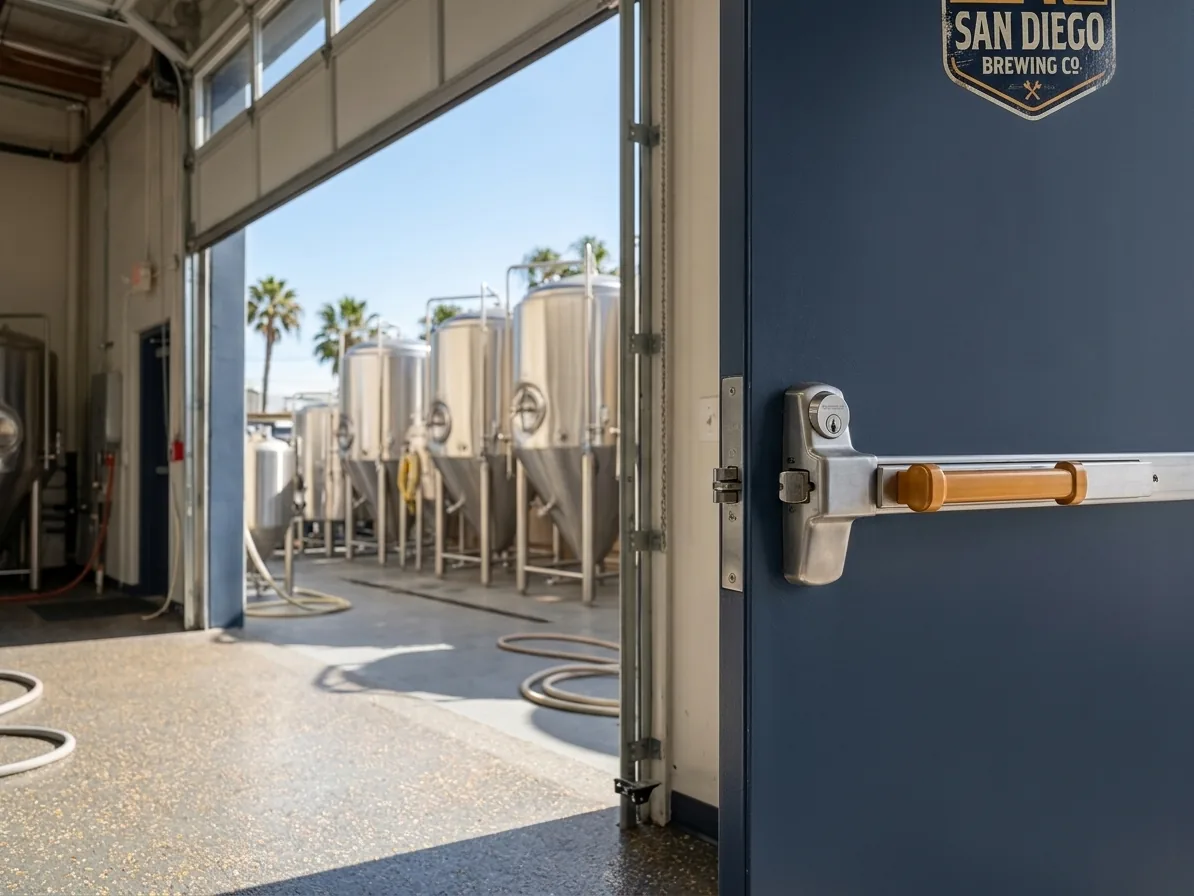
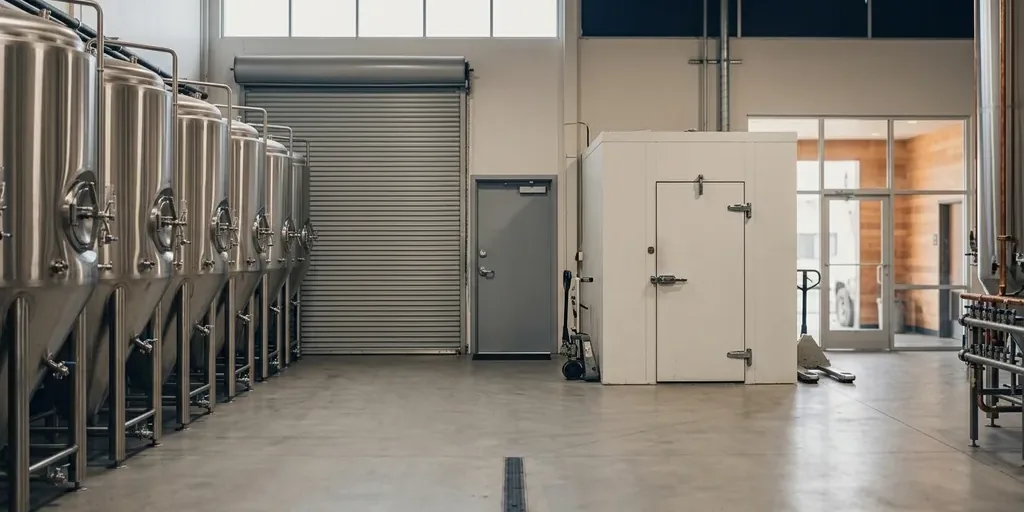
A taproom out front, a production floor behind the wall
A brewery is two buildings sharing one address. Out front there is a room full of people, a bar, a patio, and a Friday night crowd.
Behind the wall there is a production floor with forklifts, glycol lines, hoses on the ground, and a cold box holding most of your inventory. The doors between those two worlds, and the doors that let deliveries in, carry the whole load.
Most San Diego taprooms sit in buildings that were never drawn for this. A tilt up industrial suite in Miramar or Kearny Mesa gets a storefront cut into the front elevation, a bar built where the racking used to be, and the original overhead door at the dock, sectional or coiling, stays right where it was along with the hollow metal man door beside it. That hardware was specified for a warehouse tenant. Now the same openings carry the public, the crew, and every delivery.
We are a commercial door contractor and commercial locksmith. We work on the openings, not the beer. If you run a brewery, a tasting room, or a building full of them, we can walk the site, list what is failing and why, and quote it as one scope.
What actually goes wrong in these buildings
Wash down, keg carts, and a Friday crowd wear out the hardware an industrial shell came with, and these are the openings that fail first.
That opening carries production traffic, not office traffic, and it is usually the first door on the site to show wear. We put a Grade 1 cylindrical or mortise lockset on it with a working deadlatch, so the auxiliary plunger rides the strike lip instead of dropping into the cutout where the latch can be carded. The frame gets a full ANSI strike with a reinforced box behind it, not the shallow builder strike the shell came with. If the crew needs airflow, we set a closer with a hold open arm at a defined point and add a door position switch, so the door reports as open rather than quietly staying open past close.
Hose down floors, condensation rolling off the walk in, and caustic cleaner will eat a standard finish and then the door under it. We move those openings to satin stainless trim, stainless hinges and fasteners, and cylinders and strikes suited to wet locations. Hollow metal doors that have rusted through at the bottom channel can be cut back and repaired low with new channel and skin, or swapped for a new galvannealed door in the existing frame if the frame is still true and square. We supply and install the door as well as the hardware, so a rusted opening is one scope, not two vendors. We check the floor anchors and the hinge jamb reinforcement while we are in there, because a rusted anchor is usually why the door started dragging in the first place.
An egress door has to open from the inside in one motion, with no key, tool, or special knowledge, whether the room is half empty or full. We take out the back of house workarounds and put real exit devices on those openings: rim devices on single hollow metal doors, surface vertical rods on pairs where the inactive leaf has to stay usable. Where the door is not fire rated, dogging lets it push free during service hours and secure at close. Fire rated openings get fire exit hardware with no dogging, because those doors have to latch every time they close.
That is the opening that matters most, and it is almost always the worst one on the site. It should self close and positively latch on its own, with a keyed lever or a keypad on the public side and free egress from the production side so nobody is trapped behind it with a hand truck. We size and template the closer for the actual door weight and width, then set backcheck so staff coming through with a keg cart do not drive it into the wall and tear out the arm or the shoe. Kick plate on the pull side, armor plate on the push side, and the door face stops getting chewed up.
We build a master key system on a restricted keyway so blanks are not sold across a hardware store counter, and we chart the pin stacks so a taproom lead does not carry the same key that opens the grain room, the office, or the cooler. Where turnover is heavy, small format interchangeable cores let us pull a core with a control key and drop in a new one, instead of taking locksets apart and repinning them on site. Back doors that see early deliveries can run a keypad lock with a separate code per person, so a distributor code can be retired without touching anything else on the building.
A taproom entry is a high cycle opening, and on a storefront door the pivots or offset hinges wear out before anything else does. We true the door in the frame, replace the worn pivots or hinges, and reset the deadlatch and keeper so the latch actually engages instead of skimming past it. If the meeting stile needs a hook bolt, or the cylinder is worn, we match your existing keyway so the same key still works. Concealed overhead closers get rebuilt or replaced rather than propped with a wedge, and we set sweep and latch speed so the door is not slamming at last call.
The building was never drawn to be a taproom
San Diego brewing grew up in industrial space: Miramar and the Miralani area, Kearny Mesa, Barrio Logan, the corridors along the 78 and the 15, and the newer suites out toward Otay Mesa.
Walk any of those buildings and the same openings show up on the punch list.
A taproom buildout usually spends its budget on the bar, the floor, and the tap wall. The doors keep whatever the industrial shell came with. Once the room is open and the production floor is running, the openings start telling on themselves.
- Front storefront entry and any patio gate on the public path
- Hollow metal man door beside the overhead door, used for deliveries and for the crew
- The wall between the taproom and the production floor
- Cold box, keg cooler room, and CO2 storage
- Grain and dry storage, plus the office where the safe and the POS live
- Restrooms and any interior door on the accessible route
Hardware that survives a production floor
ANSI/BHMA grading is not marketing. Grade 2 is built for lighter duty and it is fine on an interior office door.
A brewery man door, a taproom entry, and the door into the brewhouse are Grade 1 openings. Put Grade 2 hardware on them and that same lock keeps coming back on your service list. Mortise locks cost more up front and hold up better on high cycle openings, because the case carries the load instead of the door face and the bolt throw is longer where the frame has moved.
Closers are the other half of the job. A closer that was never templated to the door, or that has no backcheck set, gets torn off the frame by the first person who kicks it open with a full hand truck. Arm type matters too. A parallel arm with a stop shoe protects the closer on an out swinging door where a regular arm would sit in the traffic path.
- Grade 1 cylindrical or mortise locksets on every high cycle opening
- Satin stainless trim, hinges, and fasteners near wash down and condensation
- Closers sized and templated to the door, with backcheck and sweep set on site
- Full ANSI strikes with proper frame reinforcement, not the shallow original
- Kick and armor plates where carts and kegs hit the door
- Continuous hinges where a hollow metal door has already torn out its hinge screws
- Non removable hinge pins or security studs on out swinging exterior doors
Egress and separation when the room is full
A tasting room fills up the way an assembly space does, and occupancy classification follows occupant load and your approved plans, not the sign on the door.
Once occupant load crosses the threshold your plans and your inspector identify, doors on the egress path need panic hardware. That is a separate question from whether the door is secure. Both can be true at once, and the hardware exists to do both.
The production side needs the opposite logic: public gets stopped, staff moves freely, and the door closes and latches on its own. If a door in that wall carries a fire label, treat it as a fire door: no dogging, no field prep you have not confirmed against the listing, and no wedge under it during a shift.
Patio gates and side exits deserve the same read. If a gate sits on the path people would actually take out of the building, the hardware on it has to release like an exit, not like a latch somebody has to think about.
Keys, deliveries, and who gets in before you open
Most breweries have a short list of people who need everything and a longer list who need only part of the building. That is a master key system, not a drawer full of loose keys.
We chart the system properly, build the pin stacks around your real roles, and put it on a restricted keyway so copies are controlled. Interchangeable cores are worth the upcharge where the roster changes often, because a change becomes a core rotation instead of a shop job on every lock.
Deliveries and keg pickup are their own problem. A keypad on the back door with individual codes gives you a record and an easy way to shut one person off. When the roster outgrows codes, we design and install complete access control systems: fob and mobile credential readers, door controllers, cloud managed platforms you can run from your phone, and the credential setup behind them, so a distributor's access ends the day the account does. If you already run readers on an integrator's platform, we still happily handle just the opening itself: electric strike or electrified lever, wired fail secure or fail safe based on what that opening has to do when power drops and what your fire alarm interface calls for. Egress is not handled by the electric side. The lever or the exit device on the inside releases the latch mechanically whether the door is powered or not, and that is what keeps people moving in an outage.
We also set the request to exit device and the door position switch so staff can walk out without tripping anything, and so the system knows when the door is genuinely closed and latched rather than resting against the stop.
How we quote the work and schedule around pour hours
We quote per opening and per scope, because commercial door work is not a menu item.
What drives the number is the door type, the frame condition, the grade of hardware, whether the opening is fire rated, and how much of the frame has to be corrected before new hardware will sit right. We tell you which of those apply before we start, and if an opening needs a door and not just hardware, we say that up front instead of chasing it with adjustments.
Scheduling works around pour hours, brew days, and delivery windows. If your landlord's management company requires vendor paperwork or a PO before anybody touches the building, say so when you call and we will handle it with them. Breweries that keep us on an account get one point of contact, consistent keying across every door, and a running record of what is installed where, which matters the day you open a second location or hand the building back.
- Doors on the egress path must be openable from the inside with a single motion and without a key, tool, or special knowledge. Occupant load determines where panic hardware is required, and your approved plans identify those openings.
- Labeled fire doors have to self close and positively latch. Field drilling, cutting, or adding a hardware prep outside the listing can void the label, and fire exit hardware cannot be dogged open.
- Operable hardware on accessible routes must work without tight grasping, pinching, or twisting of the wrist, which rules out knobs and most thumb latches. Opening force and closer sweep timing matter as much as the lever itself.
- Chains, padlocks, slide bolts, and second locks added to an egress door are the first thing an inspector flags in a public room, because releasing them takes more than one operation.
General principles only. Your authority having jurisdiction has the final say on any specific opening.
What we are usually called out for
Most brewery calls are for exit devices on the rear doors, closers on the brewhouse wall, storefront repair out front, and keying or access control for seasonal crews.
Panic Bars and Exit Devices
Commercial exit hardware, San Diego County
DetailsDoor Closers
Surface, concealed, and floor closers
DetailsStorefront Door Repair
Aluminum entrances and storefront systems
DetailsMaster Key Systems
Commercial keying design for San Diego buildings
DetailsAccess Control Systems
The whole system, credential to latch
DetailsKeypad Locks and Keyless Entry
Standalone keypad and fob locks. No server, no subscription.
Details