Commercial Door and Lock Service in Downtown San Diego
Commercial Lock & Door Co. repairs storefront entries, alley exit doors, tower lobby closers, and tenant suite locks across Downtown San Diego, from the Gaslamp Quarter and East Village to Little Italy and the Columbia waterfront blocks.
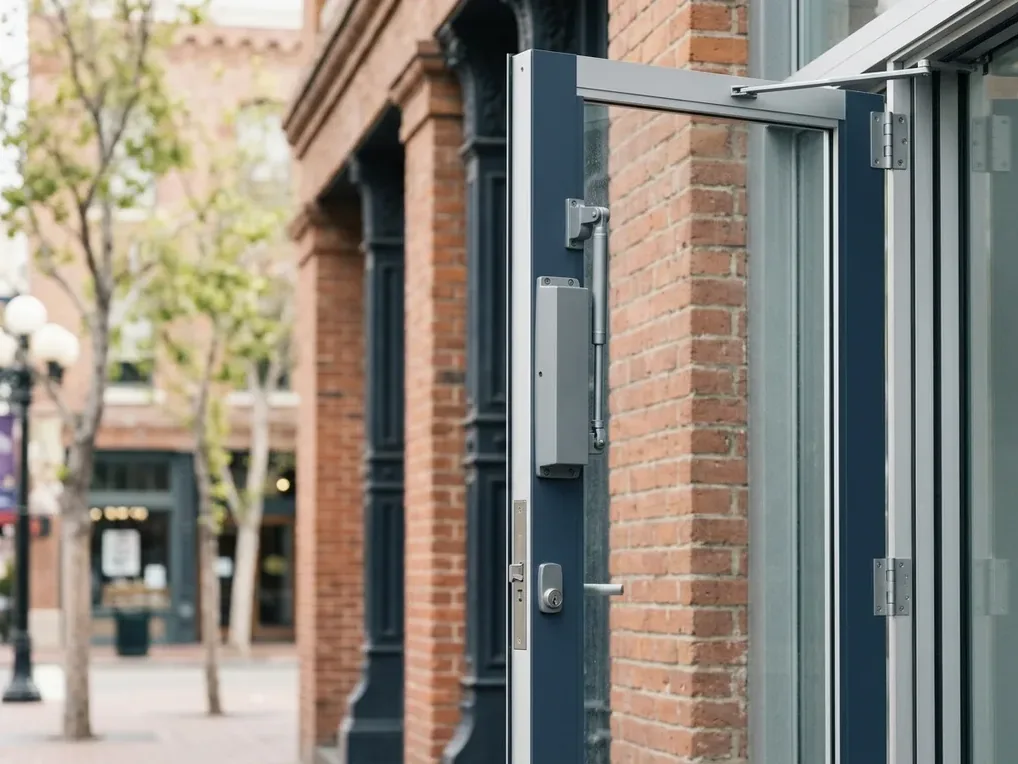
A century of building stock in a few dozen blocks
Downtown packs a century of construction into a few dozen blocks between the I-5 spine and the waterfront.
A Gaslamp storefront with a narrow stile aluminum entry sits next to a tower lobby with concealed closers, and both back onto the same alley where a hollow metal rear exit takes the real abuse. We service the hardware on all three.
Commercial Lock & Door works downtown as a door contractor first and a locksmith second. The truck carries closers, exit device parts, pivots, deadlatches, cylinders, and strikes, because most downtown calls turn out to be a door problem wearing a lock problem's clothes. A key that stopped working is often a door that dropped.
Most of this work becomes an account. One storefront entry turns into the rear exit, then the suite upstairs, then the rekey when a manager leaves. Send us the addresses and we will quote the openings.
Storefront entries on the Gaslamp and Little Italy blocks
Ground floor entries downtown are mostly narrow stile aluminum. The lock lives in the stile, the door swings on offset pivots, and the glass leaves almost no material to work with.
When one of these stops latching, the lock is rarely the cause. The pivot wears, the leaf settles, and the latchbolt stops landing square in the strike pocket. Once that happens, the small auxiliary plunger beside the latchbolt can drop into the strike cutout instead of riding the face of the strike, and the latchbolt is no longer deadlocked against being loided. We look at the door and the frame before anyone sells you a new lock.
The rest of the failures on these entries are just as mechanical. An MS deadlock whose hook no longer meets the keeper because the keeper moved. A mortise cylinder backed out far enough that the cam misses the tailpiece. A parallel arm closer on a bracket that was never templated for that door width, so the arm loads the top rail at the wrong angle. We stock common stile hardware, which keeps a lot of storefront door repair from turning into a second trip.
- Pivot, continuous hinge, and threshold replacement on dropped or racked doors
- Deadlatch and deadlock service with strike alignment and correct strike lip length
- Closer replacement and adjustment, including backcheck, to control the door on the open swing
- Mortise cylinder and cam changes to match a keyway you already carry
- Frame straightening, new stile hardware, and rekey after a forced entry
Rear exits, alley doors, and fire rated openings
The alley doors take more punishment than anything facing the street.
Crews prop them during service, dog the panic hardware and forget to undog it, and the surface vertical rods drift out of adjustment until the bottom latch no longer picks up the floor strike. We reset rod length, replace worn latches, pins, and strikes, and set closer latch speed and spring size for the door and the opening so the closer is driving the door into the latch rather than leaving it against the stop.
Anything with a label on the hinge edge is a fire door, and that label controls what can be done to it. Field drilling and cutting have to stay inside what the door and hardware listings and NFPA 80 allow, and work beyond that can take the opening out of compliance. A hold open device belongs on a labeled door only when it is a listed device that releases the door on alarm. A wedge, a chain, or a bent hinge pin is not that, and neither is a closer arm with the hold open feature set on a door that has to self close.
Where an alley door needs to be released from a desk or a kitchen pass, the usual answer is an electric strike sized for the frame and the latch, wired fail secure so the opening stays locked when power drops, with a request to exit device and a door position switch so the building knows the door is closed. On a labeled opening that strike has to be listed for fire door use and the frame prep has to match, which makes it a specification question before it is a wiring question.
Tower lobbies and tenant suites
High rise work downtown is a finish job as much as a hardware job. Floor closers under all glass entries, concealed closers in transoms, levers that have to match the rest of the floor, and building engineers who notice when they do not.
Handing gets checked before anything is ordered, because a lever pulled off the wrong hand of an opening is a return, not a repair.
Tenant turnover is the steady work: rekey the suite, pull a departed manager's keys out of the system, and reset the master keying so the engineering and janitorial routes still open what they need to open. Corridor doors usually run Grade 1 mortise with the lock body already prepped for the function that suite needs, so a change in use is often a case and cylinder change rather than a new opening.
We keep the bitting and keyway records for accounts we service, so the next change is a phone call rather than another survey of every cylinder in the building.
Working downtown without shutting you down
Downtown scheduling is its own trade. Loading zones fill by mid morning, the freight elevator has to be reserved, and no restaurant can lose an entry door on a Friday evening or on a night when the East Village blocks fill up.
We plan around service hours. On an occupied opening we will usually make the door secure and operable first, then come back to finish the permanent repair when the space is quiet.
Quotes are per opening and itemized, and clear photos of the door, frame, and hardware are usually enough for us to price the job before the first visit. Send the building's vendor requirements with the quote request too. Purchase order numbers, badge access, after hours windows, and property management paperwork are normal here, and knowing them up front keeps the work order from stalling.
Services we run in Downtown San Diego
The downtown route covers new hollow metal and storefront doors, card access and lobby intercoms for the towers, and the rekey when a Gaslamp bar manager leaves.
Nearby
A property manager with a Columbia tower and a Mission Valley or Kearny Mesa building gets both on the same dispatch and the same key records.