Door and Lock Service for San Diego Restaurants and Bars
Commercial Lock & Door Co. repairs and rekeys the doors of San Diego County restaurants and bars: exit devices, closers, storefront entries, walk-in and liquor room hardware, and role-based key schedules, with work scheduled between close and prep.
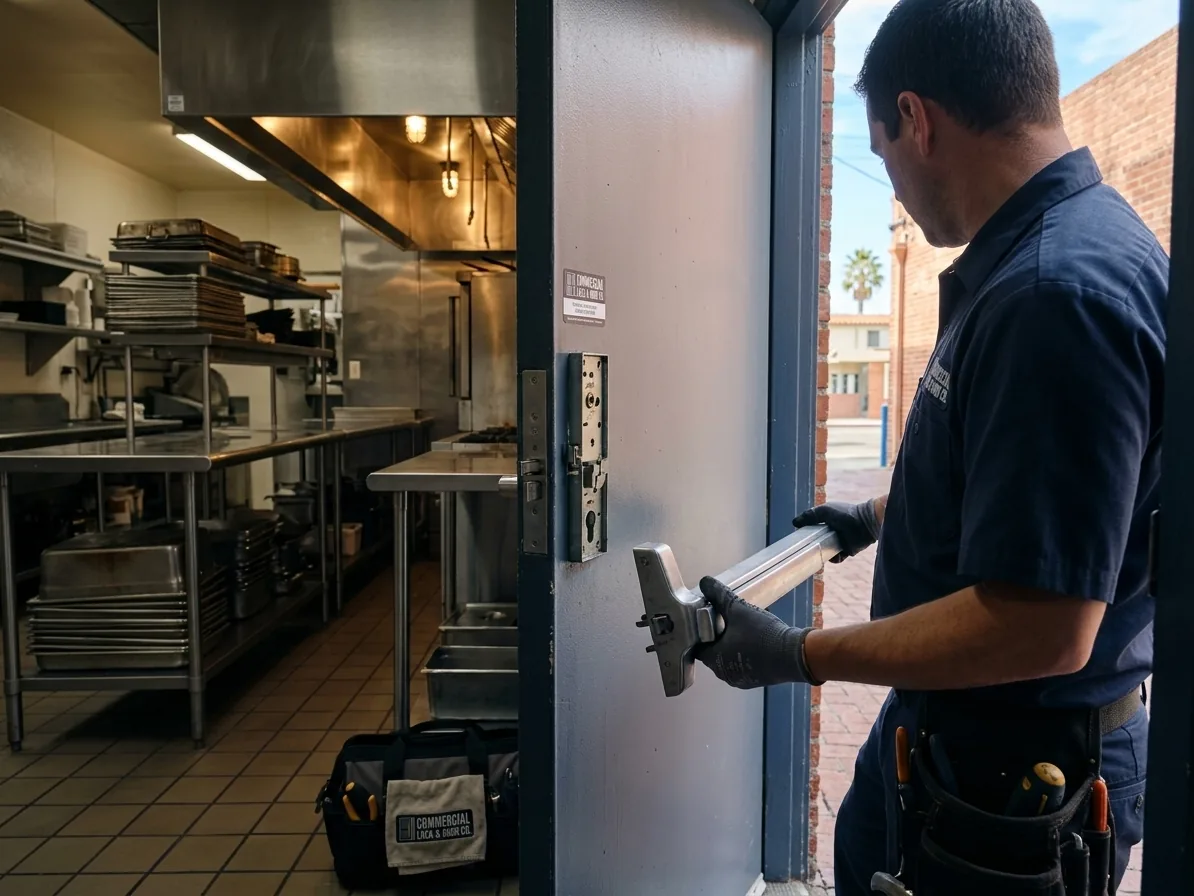
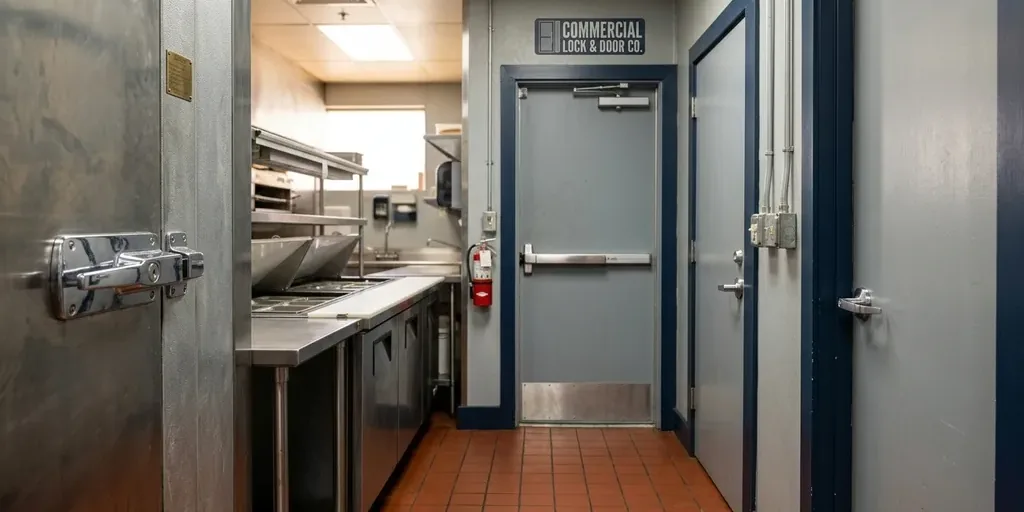
Why restaurant doors wear out faster than the building
Restaurant hardware works harder than almost anything else in a commercial building. Every server, runner, vendor, guest, and closing manager works the same handful of doors, through every service.
Add kitchen grease, coastal salt air, and a rear exit that opens onto an alley, and hardware specified for an ordinary commercial building starts failing early.
Commercial Lock & Door works on the doors themselves. Exit devices, closers, storefront pivots, deadlatches, mortise locks, strikes, and the keying schedule behind all of it. We work for single locations, restaurant groups, and the property managers who lease to them across San Diego County, from the Gaslamp and Little Italy out to North Park, the Convoy corridor, La Mesa, Chula Vista, and the coast.
Most of this work gets scheduled between close and prep, quoted in writing before anyone starts, and documented so the next call begins from a record rather than a guess.
What actually goes wrong in these buildings
Propped alley exits, grease-seized latches, a liquor room keyed like the dining room, and sagging storefront pivots are the repeat calls from San Diego kitchens and bars.
The answer is hardware that lets the door stay closed and still works for the crew. A rim exit device with a keyed night latch pull outside lets a cook run the dumpster and get back in with a key instead of a milk crate in the jamb. Where the trip is constant, a keypad on the outside trim handles it with no key in circulation. When a door keeps ending up open, a door position switch on a local sounder makes it audible at the door instead of a surprise at close. Chains, slide bolts, and padlocks on an occupied exit are not an option and we will not hang them.
Airborne grease coats latch bolts, closer arms, and hinge knuckles, collects dust, and the latch stops throwing. Oil based lubricant makes it worse because it holds more grease. We strip the device, run a dry PTFE lubricant, and replace what is past cleaning. Near the dish pit the base of a hollow metal frame and the strike area rust out from standing water. Stainless strikes, a continuous hinge, kick plates, and a frame repair at the bottom are built to outlast another round of swapping the lockset.
Liquor storage, wine, and the office belong on their own key group, not on the key the whole floor carries. A restricted keyway means a bar manager cannot get a copy cut at a hardware store on the way home. Small format interchangeable cores let you pull a core and drop in a new one without a full service call each time a keyholder changes. Walk-in doors are their own hardware family, with Kason style latches and an inside safety release that has to stay operable at all times. A keyed deadbolt never belongs on a walk-in.
Turnover is fast, and after enough departures nobody can say with confidence how many keys are out. Build the schedule around roles instead of people. Closing manager, kitchen lead, and ownership get separate levels, and the doors each level opens get decided once and written down. When someone leaves, you rekey that group rather than the whole building. On the office and liquor room, a keypad with a code per shift lead turns a departure into a code change instead of a truck roll.
Aluminum storefront doors wear at the pivots and the closer first. The door drops, the deadlatch no longer meets the strike squarely, and staff start slamming it to make it catch. Left alone, the corner racks and then the glass becomes the problem. We reset or replace top and bottom pivots, template the closer properly and set backcheck so the door does not blow open into the sidewalk, and adjust the deadlatch so the anti-shim plunger rides the strike face instead of dropping into the keeper. When the stile or corner is past straightening, we also supply and install a new aluminum storefront door in the same opening.
Gaps under a rear door invite rodents, and the usual fix is whatever sweep was in the back office. A correct sweep, plus an astragal on a pair, closes the gap without dragging the door or fouling the panic hardware. What cannot happen is a sweep, weatherstrip, or threshold that pushes opening force past what a person can move in a hurry. After the sweep goes on we reset the closer so the door still closes and positively latches on its own.
The hardware we service in restaurants and bars
Most restaurant calls come in as one broken door. Often the openings around it are showing earlier stages of the same wear pattern, because they run the same traffic and were specified the same way.
We quote the one that stopped working and note the others so you can plan the rest instead of getting surprised on a Friday night.
- Rim, mortise, and surface vertical rod exit devices, including dogging, latch adjustment, and rod replacement
- Door closers: correct templating, arm and shoe replacement, sweep and backcheck adjustment on high cycle doors
- Aluminum storefront entries: pivots, deadlatches, MS style hookbolt deadlocks, thresholds, weatherstrip
- Hollow metal rear and service doors, frame and strike repair, continuous hinges
- Grade 1 mortise locks and cylindrical locksets where the traffic justifies them
- Electric strikes and electrified levers where a reader, intercom, or buzzer has to release the door
- Keypad and keyless entry on offices, liquor rooms, and delivery doors
- Restricted keyways, interchangeable cores, and full master key schedules
Keying a restaurant so it survives turnover
A workable master key schedule starts with a list of doors and a list of roles, not with a pile of existing keys. From there the pin stacks get planned so each role opens exactly what it should and nothing more.
Cross keying a door into several groups to solve one staffing problem is how a system quietly loses its integrity, so we would rather add a group than stack a cylinder.
Restricted keyways matter more here than in almost any other building type, because keys spend their lives in pockets and go home every night. Pair that with interchangeable cores on the doors that change hands most, and a departure becomes a core swap on the liquor room and the office rather than a rekey of the whole floor.
Grade 1 versus Grade 2 on a restaurant door
ANSI/BHMA grading is a cycle and strength rating, and the difference between Grade 2 and Grade 1 shows up on a door that works through every service.
A Grade 2 lever on a kitchen or vestibule door tends to loosen, then drop, then stop retracting the latch cleanly. Grade 1 hardware is built for heavier duty, and on the same opening, set against a proper strike with a correctly templated closer, it is the right specification for a door that never gets a quiet hour.
Cost on this work is driven by the door and frame you already have, not by a menu. A hollow metal door with an intact frame prep takes hardware straight. A storefront door with a worn stile, a fire rated door that needs listed prep, or a rear opening that needs frame repair before a strike will hold, all add labor. We put that in the quote in plain terms before we start.
Scheduling, quotes, and setting up an account
We schedule around service. That usually means after close, early before prep, or a slow midweek afternoon.
Tell us what is installed when you call, or send a photo of the device, the frame, and the strike, so the hardware can be sourced ahead of the visit rather than identified at the door. Emergency work gets stabilized first and finished properly on a scheduled return once the right part is in hand.
Quotes go out in writing. We work on purchase orders, take direction from a property manager or a landlord as easily as from an operator, and keep your keying records on file so the next call starts from what is already installed. If the building requires documentation on file before anyone is on site, send those requirements along with your quote request and we will handle it through the office.
If you run several rooms in San Diego County, ask about setting up an account. One keying plan, one hardware standard across locations, and a record of every door we touch, so the next request starts from the existing schedule instead of a fresh survey of the building.
- An exit door in an occupied space has to open from the inside in one motion, with no key, tool, or special knowledge. Chains, padlocks, surface slide bolts, and add-on thumbturns on a rear exit are the quickest way to fail an inspection. Where occupant load calls for panic hardware, the device has to be listed for that door and frame.
- Fire rated doors carry a label on the hinge edge and must self close and positively latch every time. Field drilling for a new lock, cutting in a vision panel, or any other alteration made outside the listing voids that label, which is why prep on a rated door is done with listed hardware and listed methods. Propping a rated door open does not void the label, but it defeats the door and a rated opening held open by a wedge or a milk crate is a finding on its own. Fire exit hardware is never dogged.
- Accessible entrances need hardware that works without tight grasping, pinching, or twisting of the wrist. Levers, push pads, and paddles meet that, knobs do not. Mounting height, opening force, closing speed, and clear floor space on the pull side all matter, and a new threshold or sweep can push a compliant door out of range if the closer is not adjusted with it.
- Anything electrified on an egress door has to fail in a direction the building can live with. Fail safe releases on power loss, fail secure stays locked while free egress from inside is preserved mechanically. Fire alarm interface, request to exit devices, and any delayed egress arrangement should be worked out with the authority having jurisdiction rather than improvised at the door.
General principles only. Your authority having jurisdiction has the final say on any specific opening.
What we are usually called out for
Rear exit devices, front entry closers, storefront pivots, and the rekey after a key leaves in an apron pocket make up most restaurant and bar calls.
Panic Bars and Exit Devices
Commercial exit hardware, San Diego County
DetailsDoor Closers
Surface, concealed, and floor closers
DetailsStorefront Door Repair
Aluminum entrances and storefront systems
DetailsCommercial Rekey
Repin the cylinders you already own
DetailsStorefront Door Installation
Narrow, medium, or wide stile, sized to the traffic
DetailsKeypad Locks and Keyless Entry
Standalone keypad and fob locks. No server, no subscription.
Details