Door and Lock Service for San Diego Self Storage Facilities
Commercial Lock & Door Co. services the doors and locks at self storage facilities across San Diego County: entry and corridor doors, closers, electric strikes, roll-up unit latches, overlock and lien cutting, and master key systems for site staff.
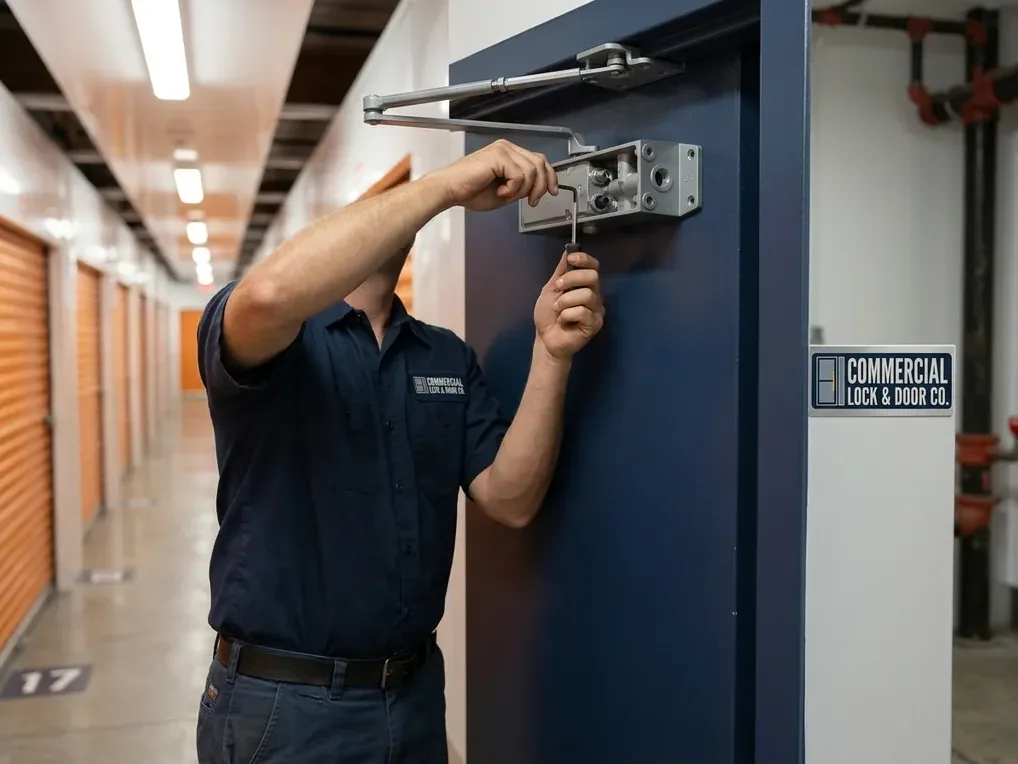
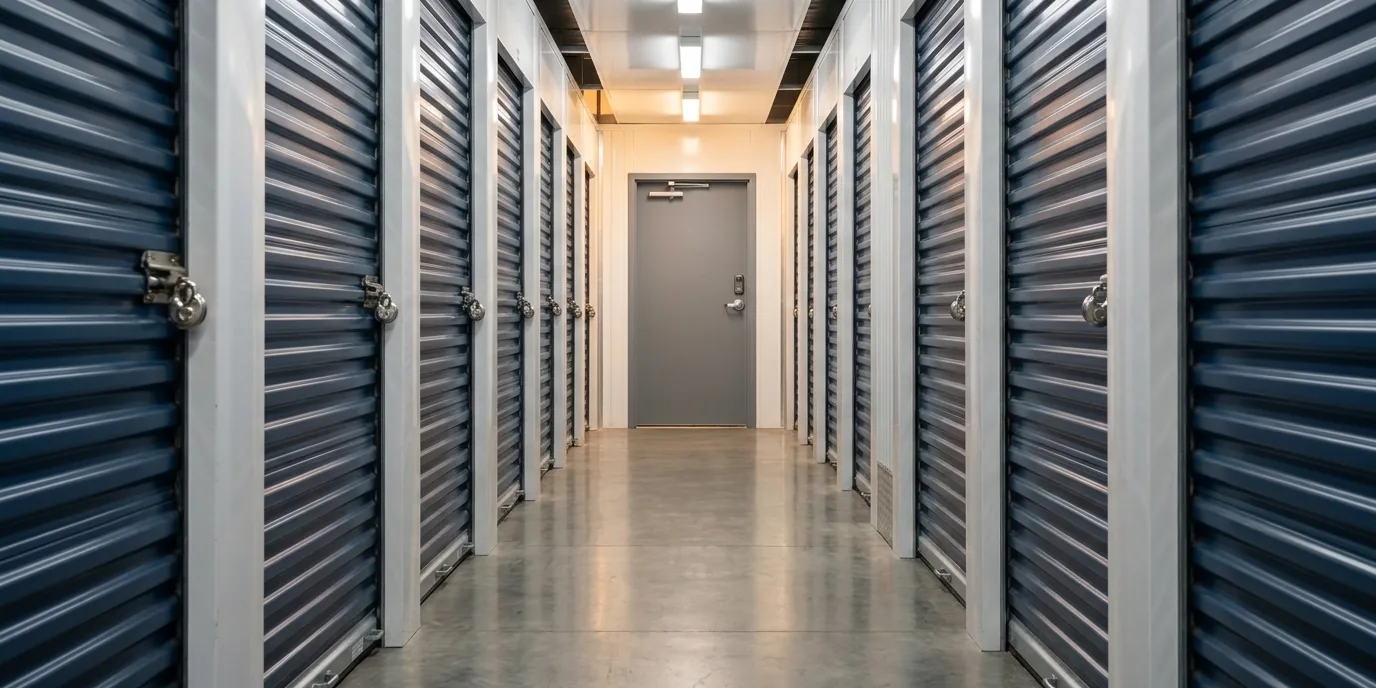
A few hundred doors, one or two people on site
A self storage facility is a lot of doors on a very small payroll.
One or two people on site, a gate, an office, a few hundred unit latches, and in a climate controlled building, corridor and elevator lobby doors that take cart traffic all day. When one of those openings stops working, it is rarely a full replacement. It is a latch out of alignment, a closer that has lost its backcheck, a strike that no longer catches, or a cylinder that has taken on coastal air.
Commercial Lock & Door works with storage operators across San Diego County, from the industrial corridors off Miramar Road and Kearny Mesa to the sites near Otay Mesa and the older buildings closer to downtown. We are a door contractor, commercial locksmith, and access control installer. The gate operator stays with your gate vendor. Everything from the building entry inward, keypads, readers, electric strikes, and the door hardware behind them, we can design, install, and keep working.
Most storage work becomes an account rather than a one-off call. You get a scope in writing before we start, a purchase order number on the invoice if that is how your accounting runs, and a crew that already knows how your building is put together.
What actually goes wrong in these buildings
Month-end lien cuts, forced roll-up latches, cylinders seized by coastal air, and corridor doors propped with carts are the calls a storage site manager makes most.
We do cut and replace work in batches from your unit list instead of one at a time between rentals. Cutting a disc padlock or a cylinder lock is simple. Doing it without gouging the hasp or bending the latch tongue is the part that matters, because a chewed hasp turns a rentable unit into a work order. We replace to the lock standard you already stock and flag any unit that needs hardware before it goes back on the board.
A slide bolt that will not throw is usually not the bolt. The curtain has drifted in the track, the bottom bar is out of level, or the bolt is catching the guide. Forced anyway, you get a bent tongue and a hasp that no longer lines up with the cylinder. We square the opening, replace the slide bolt and hasp, and standardize the lock type across a building so your spares actually fit every unit.
Sites near the bay, the port, and the coastal corridor go through cylinders faster than inland properties. Keys start dragging, then a tenant snaps one off in the plug during a move-in. The answer is material and finish selection plus a service interval, not a heavier key. We move exterior openings to weather-appropriate cylinders and hardware and service the ones still worth saving.
Interior corridor and lobby doors in a climate controlled building are often labeled fire doors, required to self-close and positively latch. A cart in the opening defeats both. Constant propping also kills closers: the arm springs, the backcheck goes, and the door starts slamming into the wall. We retemplate and size closers correctly for the opening and set backcheck for cart and wind loads. Where a hold-open is genuinely needed, we use listed hardware rather than a field-added kickstand.
That opening needs an electric strike or electrified lever, a request to exit device, a door position switch, and a closer that lets the latch seat before the strike relocks. Most after hours entry complaints we get trace to the door, not the reader. Fail-safe versus fail-secure is decided per opening based on what happens when power drops, and free egress wins that argument every time.
The keys that matter are the office, the safe or cash room, elevator equipment, roof access, and whatever vacant-unit lock inventory was sitting in a drawer. A flat set of hardware store keys makes that a full change every turnover. A small master key system on a restricted keyway means you rekey only the cylinders that matter and control who can cut a copy. We build the pinning chart and hand you the bitting record.
The openings that actually carry a storage site
Storage buildings hide their door problems well. Unit doors get the attention because tenants touch them, but the openings that generate real downtime are the ones staff walk through without thinking.
We service all of it, hollow metal and aluminum storefront alike, and we keep notes on what is installed where so the second call is faster than the first.
- Facility entry and vestibule doors, usually aluminum storefront running a deadlatch in a narrow stile
- Office and counter doors, including the door between the office and the retail area
- Corridor and elevator lobby doors in climate controlled buildings, frequently labeled openings
- Stair doors and roof access, where egress and security pull in opposite directions
- Loading bay and cart staging doors that take the most abuse per square foot
- Elevator equipment and utility rooms that belong on a separate key
- Roll-up unit doors, latches, hasps, and the lock standard behind them
Unit latches, overlocks, and turning a unit back around
Every unit is a rental line item. A day spent with a bent hasp or a seized cylinder is a day it earns nothing.
Most operators already have a house lock standard, disc padlocks or cylinder locks, and the value in a scheduled visit is clearing the whole list in one pass.
If your overlock program uses a distinct color or lock type, we keep to it so a manager can read a corridor at a glance.
- Batch cutting on delinquent and lien units without damaging the hasp
- Slide bolt, latch tongue, and hasp replacement on roll-up doors
- Standardizing lock type across a building so spare stock fits every unit
- Keyed-alike or keyed-different vacant-unit locks supplied to your standard
After hours access and the hardware behind the keypad
Extended access hours are a sales feature and a maintenance problem. Once the office is dark, every entry door has to hold, latch, release for a valid credential, and still let anyone inside get out with one motion.
Hold, latch, release, and free egress: that is four separate pieces of hardware working together, and any one of them can put a tenant on the phone at nine at night.
We can design and install the whole access system, readers, keypads, door controllers, and credentials, including cloud-managed platforms your managers can run from a phone. Where your gate or keypad vendor already provides the credential and the wiring, we make the door itself work with it.
- Electric strikes sized and prepped for the existing frame and lock
- Electrified levers and exit trim where a strike is the wrong answer
- Exit device dogging set so daytime traffic is not fighting the latch
- Door position switches aligned to stop nuisance alerts
- Latch protectors and hardened strikes on exterior storefront doors
How we work with storage operators
Storage is a portfolio business, and one facility is rarely the whole conversation. We are set up for that.
Scope in writing before work starts, PO numbers carried through to the invoice, vendor onboarding paperwork and W-9s routed to your corporate office instead of dropped on the site manager, and scheduling that stays clear of your busiest move-in windows.
For multi-site owners we hold a hardware standard per portfolio so the same closer, the same cylinder, and the same lock family appear at every property. That makes spares useful and turns the next repair into a parts swap rather than a survey. Call us or request a quote, and we will start with a walk of one building.
- Egress comes first at every door a person can be behind. Someone inside a corridor, stair enclosure, or unit area must get out with one motion, without a key, a tool, or special knowledge. Dead-end storage corridors ending at a locked stair door are a recurring finding.
- Labeled fire doors in corridors and stair enclosures must self-close and positively latch. Propping with a cart defeats both. Field drilling a labeled door or frame for a strike or adding a hold-open outside the manufacturer's listing voids the label, so that prep has to be done with listed hardware and the correct method.
- Electrified hardware on an egress opening must release in the arrangement the local fire authority accepts, and power-loss behavior has to be decided per door. An office door and a corridor door often land on opposite answers between fail-safe and fail-secure.
- Accessible openings need hardware operable without tight grasping, pinching, or twisting of the wrist, opening force kept within limits, and keypads placed within accessible reach range. Levers and touchpads meet that. Knobs and thumbturn-only hardware generally do not.
General principles only. Your authority having jurisdiction has the final say on any specific opening.
What we are usually called out for
On a storage site the calls cluster around the entry door's deadlatch and strike, closers on labeled corridor doors, and the master key the office carries.
Access Control Systems
The whole system, credential to latch
DetailsCommercial Door Lock Repair
Fix the opening, not just the lockset
DetailsElectric Strikes
Fail-safe or fail-secure, matched to frame and latch
DetailsDoor Closers
Surface, concealed, and floor closers
DetailsMaster Key Systems
Commercial keying design for San Diego buildings
DetailsFire Rated Door Hardware
Labeled openings, serviced without voiding the label
Details