Commercial Door Supply and Installation Across San Diego County
Commercial Lock & Door Co. supplies and installs commercial swinging doors and frames across San Diego County: hollow metal, aluminum storefront, interior wood, and fire-rated assemblies, with the hardware hung and keyed as part of the same scope.
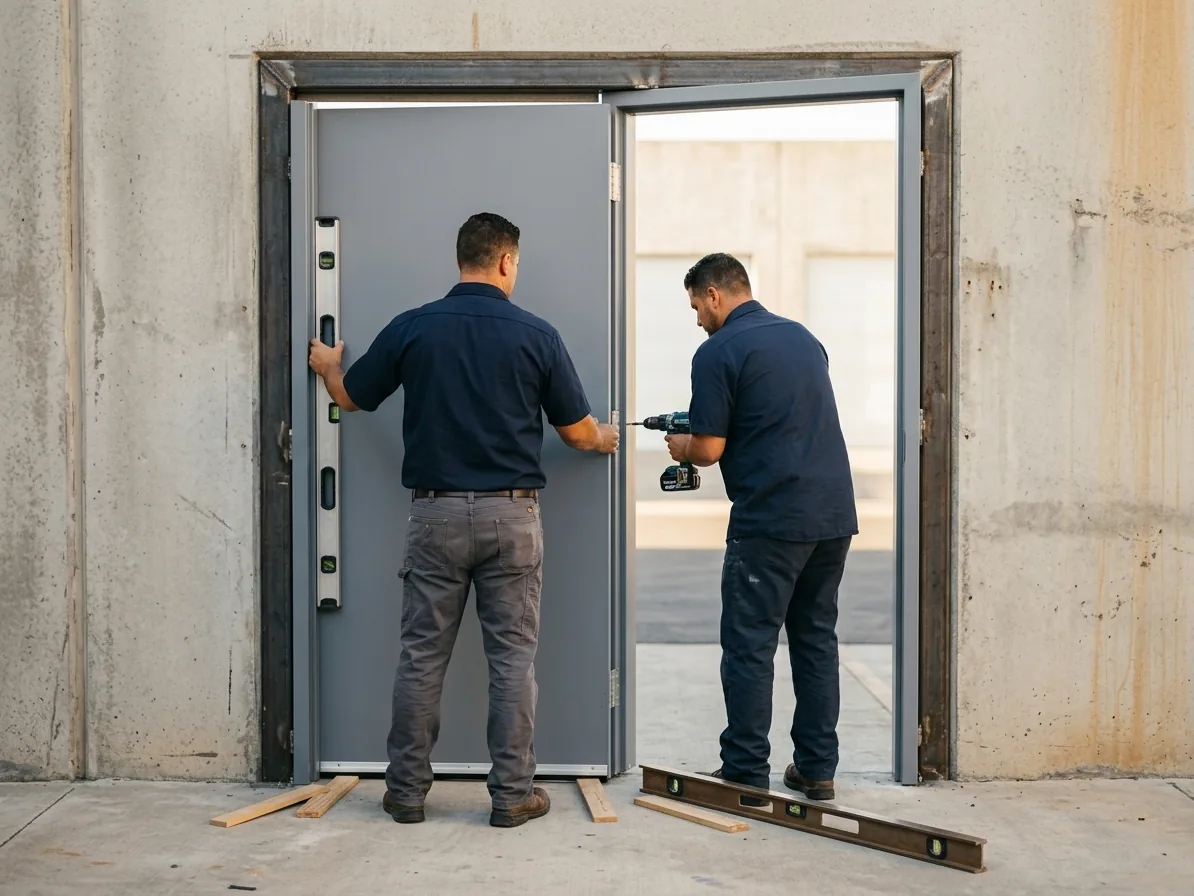
When repairing the door stops making sense
Doors reach the end differently depending on what they are made of.
A hollow metal back door rusts out along the bottom and stops holding a hinge screw. An interior office door splits at the lockset after years of hard use. A storefront leaf takes a cart hit and never sits square in the frame again. Whatever the path, you land at the same decision: keep repairing the door you have, or take it out and hang a new one.
We supply and install commercial swinging doors and frames across San Diego County. Hollow metal doors and frames for exteriors, warehouses, and stairwells. Aluminum storefront entrances for retail suites and lobbies. Wood doors for offices and suite interiors. Fire-rated assemblies where the wall demands a label. Hardware goes on as part of the same scope, keyed into whatever system the building already runs.
We came to installation from the repair side of the trade, and that shapes the advice you get. A new door is not always the answer, and we will say so when it is not. When it is, we handle the whole opening: the measure, the order, the demo, the hang, the hardware, and the old door on the truck when we leave.
A New Door Is Not Always the Answer
Plenty of doors that get quoted for replacement are one repair away from working.
A leaf that drags is usually a hinge or pivot problem. A door that slams is a closer. A latch that misses the strike is sag or a racked frame, and both can often be corrected. We repair doors every day, and when a repair is the better spend, we quote the repair.
Some failures do not come back, though. Hollow metal rusted through at the bottom rail or around the hinge reinforcements has nothing left for a screw to bite. A wood door split at the lock stile, or swollen and delaminated from water, will not hold hardware at a torque worth trusting. A leaf that took an impact and twisted will never again close flat against the stop, and every adjustment after that is chasing a shape the door no longer has.
The frame decides more than the door does. A sound frame means the new leaf hangs in the existing opening, which keeps the job short. A frame rusted out at the sill, spread by prying, or cracked at the hinge jamb goes out with the door, because a new door hung on a bad frame is a callback with a delivery date attached.
When the call is close, we quote both paths in writing and tell you which one we would pick and why.
The Doors and Frames We Supply and Install
The trade splits by material, and each material has its own page on this site because each one is its own job.
Hollow metal doors and frames are the workhorses: exteriors, stairwells, electrical rooms, and the warehouse and tilt-up stock out toward Miramar and Otay Mesa. Aluminum storefront entrances are the glass doors on retail suites, restaurants, and office lobbies from Downtown to UTC. Interior wood and office doors are the suite entries, private offices, and conference rooms behind the lobby.
Fire-rated assemblies cut across all of it. Where the wall is rated, the door, the frame, and the hardware go in as a labeled set, and that changes what can be ordered and what can be touched in the field. If you are not sure whether an opening is rated, the wall it sits in usually answers the question before the door does.
What we do not install: roll-up and coiling doors, automatic sliding doors, revolving doors, and gate operators. Swinging doors and the frames they hang in are the trade here, and staying inside it is part of why the work holds up.
- Hollow metal doors and frames for exteriors, stairwells, and utility rooms, welded or knock-down to suit the wall and the traffic
- Aluminum storefront entrance doors and complete framed entrances, from door-only swaps in sound existing framing to full tear-outs with new frame, sidelites, and transom
- Interior wood and hollow metal doors for suites, offices, and corridors
- Fire-rated door and frame assemblies with labeled hardware
- Frame repair or replacement where the opening, not the door, is the problem
Hardware Goes On in the Same Scope
A new door carrying a worn closer and a twenty year old lockset is half a job.
Every replacement quote we write settles the hardware question opening by opening: what carries over, what is at end of life, and what the new door should be prepped for before it is ordered.
Prep is the part that saves money when it is planned and costs money when it is not. Doors and frames are ordered with the cutouts and reinforcements for the specific hardware going on them: the closer, the exit device, the lockset, the hinges. Field cutting a door that arrived with the wrong prep is slow on a standard door and off the table on a labeled one. So we spec the hardware first and the door second, in lines we install every week: Steelcraft and Ceco on the door side, Von Duprin, LCN, and Schlage on the hardware side.
Keying is handled before the door goes in, not after. New locks get keyed into the system the building already runs, folded under the existing master chart, or set up fresh if there is no chart worth keeping. And if the opening is getting a reader or keypad down the road, we prep for it now, so nobody is cutting into a new door six months after it was hung.
Measuring, Ordering, Lead Times, and Door Schedules
The measure visit is where replacement jobs are won or lost. We record the opening size, the handing, the frame profile and depth, the wall construction, the swing clearance, and every hardware prep on the existing door.
Handing is the classic mistake in this trade: a door ordered backwards is not a discount, it is a reorder, and the opening waits while the second door gets built.
Lead times are stated at the quote, not discovered after demo. Standard hollow metal sizes in common configurations move faster than doors with vision lites, louvers, odd dimensions, or special finishes. Storefront leaves are fabricated to the opening. Labeled assemblies take what they take. We put the expected window in the quote, and nothing gets demolished until the new door is on the ground and checked against the measure sheet.
For tenant improvements we work from the door schedule. Send the schedule and the hardware sets and we price per opening, flag conflicts between the sets and the walls they are shown in, supply and install the lot, and coordinate keying at turnover so the general contractor hands over keys instead of promises. If there is no schedule yet, we can walk the space and build one.
Between Demo and Install, the Opening Stays Secure
A door swap in an existing frame is usually a matter of hours. The old leaf comes off, hinges and hardware go onto the new one, and the door is closing and locking before we pack up.
A frame replacement is a longer day: the old frame comes out in sections, anchors are pulled or cut flush, and in masonry or tilt-up walls the new frame is set, anchored, and grouted before the leaf is hung.
The opening is never left open and unattended. If a job carries past close of business, the plan for securing it is agreed before demo starts: either the work is sequenced so the door locks at the end of the day, or the opening is boarded with the fasteners on the inside. On occupied buildings we put the loud parts, the cutting and the drilling, into hours the building can tolerate, which in the office parks around Kearny Mesa often means early mornings or a weekend.
The old door and frame leave on our truck. Steel goes to scrap, wood goes to disposal, and you are not left with a dead door leaning on the wall by the dumpster for a month. One thing we will not do is rehang an old fire door on a different opening as if the label travels with it. Whether a rated assembly can be reused is a question for the label and the authority having jurisdiction, and the honest answer is usually no.
Egress, Fire Labels, and Clearances on a New Opening
A replacement door touches rules the old door may have predated, and the time to think about them is before ordering, not at the final walkthrough.
Egress comes first. Doors on an exit path generally have to open with one motion, without a key or special knowledge, and swing the way the occupant load requires. A new door is a bad place to reproduce the double keyed deadbolt somebody added to the old one in 1998.
Fire labels come second. An opening in a rated wall calls for a labeled assembly, and the label is a package: the door, the frame, and the hardware are listed together, and what can be modified in the field is tightly limited. That is why rated doors get ordered with every prep already in them, and why the hardware conversation happens before the order, not after the delivery.
Accessibility comes third. Clear width, threshold height, lever hardware that works without tight grasping, opening force, and the maneuvering clearance beside the latch all come into play on a new opening in a way nobody may ever have raised about the old one. We build to the drawings when there are drawings and flag the gaps when there are not, and on all of it the authority having jurisdiction has the final say.
Commercial work is quoted per job, never off a price list. These are the factors that make a quote larger or smaller:
- Door type and material. An interior wood door, a hollow metal exterior, and an aluminum storefront leaf are three different orders and three different installs.
- Whether the existing frame stays or goes. Frame replacement adds demo, anchoring, and in masonry or tilt-up walls, grout work.
- Fire labels. A labeled assembly means a listed door, frame, and hardware set ordered together, with no field improvisation.
- Custom sizing and options. Vision lites, louvers, odd dimensions, and special finishes all add fabrication over a stock door.
- How much hardware carries over. Reusing a sound closer and exit device costs less than replacing everything on the opening.
- Access and timing. Occupied buildings, after-hours windows, and secured or upper-floor openings add time to the same swap.
Where we run commercial door installation
Rusted sills on Otay Mesa tilt-ups, racked storefront frames on El Cajon retail strips, and worn suite doors in Poway business parks get the same measure visit.
Common in these buildings
Portfolio back doors patched past holding hardware, business park door schedules with no installer attached, and warehouse exits rusted through at the sill start most of these calls.