Door and Lock Work for San Diego Retail and Storefront
Commercial Lock & Door Co. repairs storefront entries, receiving doors, and stockroom hardware for San Diego County retail stores, with interchangeable core key control, closer service, and smash and grab hardening that keeps the brand look.
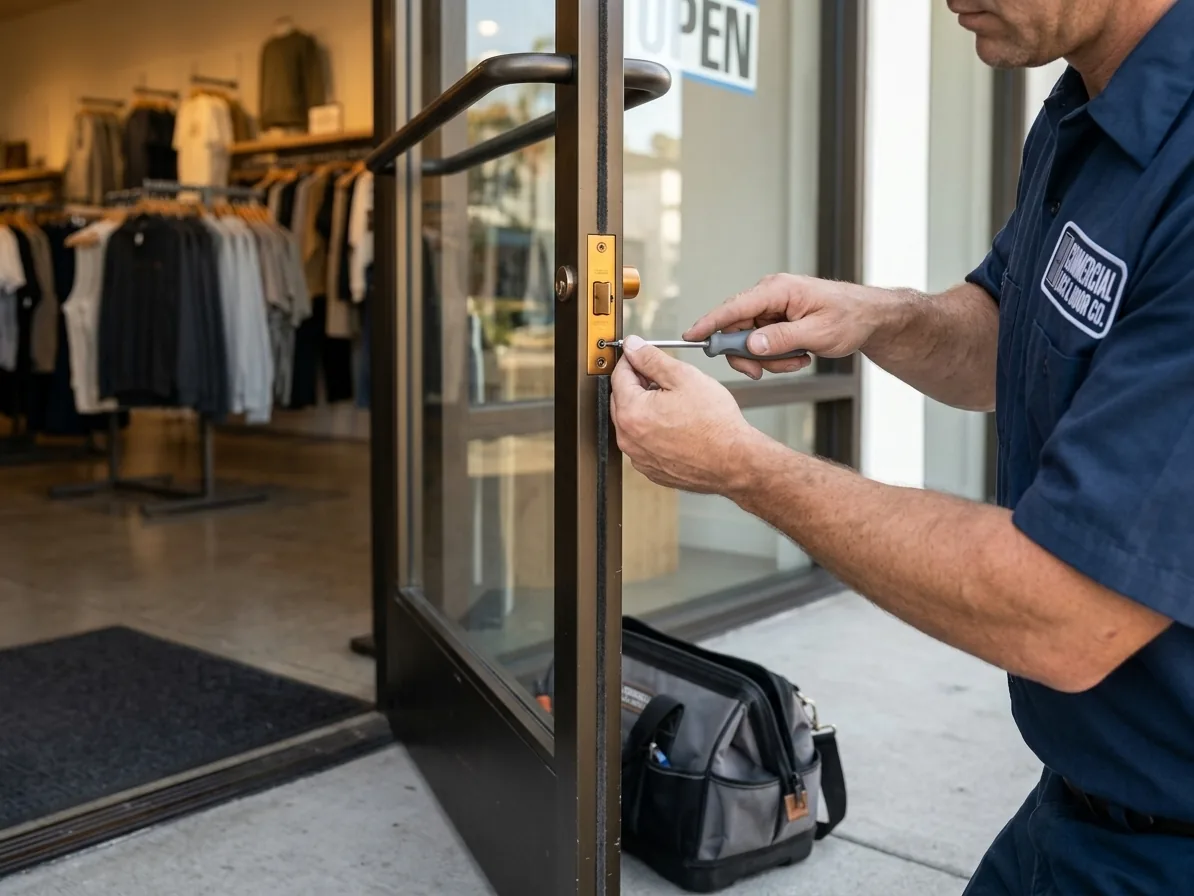
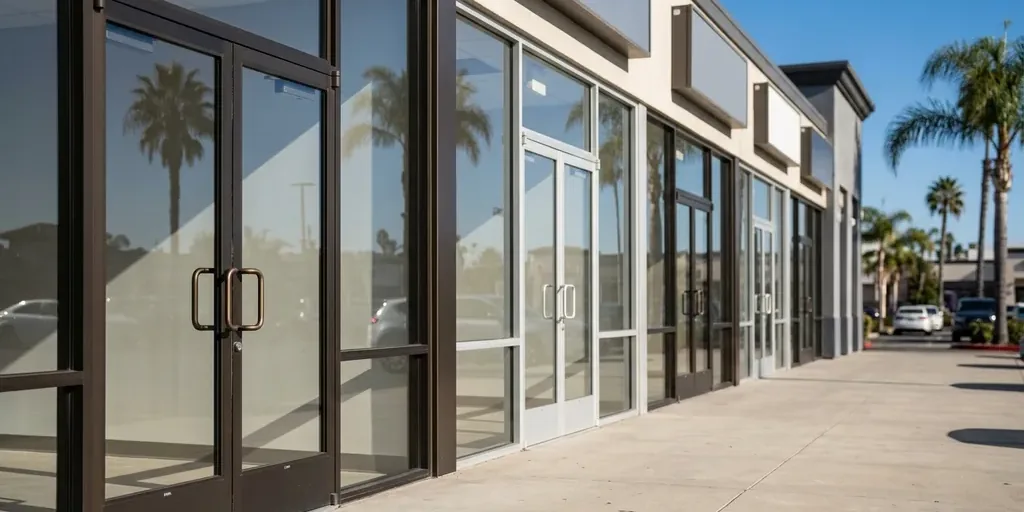
When a store door fails, it fails in front of customers
Retail doors fail in public. An office suite can live with a sticking latch for a week and nobody outside the floor knows, but a store cannot.
The customer feels it in the first second, the associate props the door to stop fighting it, and the district manager hears about it before the end of the day.
Commercial Lock & Door works on the entries, back doors, and stockrooms of stores across San Diego County. Aluminum storefront at a strip center off the 8, hollow metal receiving doors on a mall service corridor, hardware behind a roll-down grille, and every cylinder keyed behind them. We quote the work, schedule around center hours, and get the landlord's vendor paperwork submitted before the truck rolls.
Most of what retail actually needs is not an emergency. It is the door that has been dragging since spring, the closer that slams, the back door that never latched right, and a key ring nobody can account for. On a schedule that is one maintenance visit. Left alone it becomes a Saturday morning with plywood.
What actually goes wrong in these buildings
Store managers call about the same few doors: an aluminum entry dropping at the lock stile, a stockroom key nobody can account for, and a propped receiving door.
An aluminum storefront door is a frame of stiles and rails pulled together by tie rods through the corner joints. When those loosen the door racks out of square and drops at the lock stile. Replacing the lock changes nothing. We check the top and bottom pivots or the offset hinge for wear, tighten or re-pull the corner tie rods, reset the leaf square in the opening, then adjust the deadlatch and the strike so the plunger actually rides the keeper instead of the latch bolt alone. If the stile is chewed out at the pivot, we say so and quote a leaf rather than sell you three visits of adjustment.
We schedule retail work before opening or after close, and we plan around the center's own rules for after-hours entry, dock use, alarm codes, and security escorts. Send us the property management contact and their vendor requirements up front and we handle that side ahead of the visit, so your manager is not standing at the door at seven in the morning waiting on a form.
Turnover is a system problem, not a rekey problem. We set the store up on small format interchangeable cores so a turnover swap is a core change with a control key instead of a service call, and we cut on a restricted keyway so a key cannot be duplicated at a hardware store kiosk. The cash office and the comm closet get their own change keys off a separate branch of the pin stack, so the people who pull stock are not automatically the people who reach the drawer. You get a key record you can hand to the next manager.
That is hardware, not a memo. A rim exit device with cylinder dogging instead of hex dogging means only a manager with a key can hold the pad down, and the key comes back to the office. Add a hold-open arm sized for the door so nobody wedges a pallet jack against the closer and tears the shoe out of the frame. A door position switch wired to a local sounder in the stockroom lets the floor know the door has been standing open, and it does not need to be tied into anything larger to do that job.
Smash and grab at a strip center goes through the glass or through the gap between a pair of doors, almost never through the cylinder. The hardening that keeps the look: a hookbolt style maximum security deadlock at the meeting stile instead of a plain spring latch, a flush or floor bolt in the inactive leaf that actually engages the threshold, security film or laminated glazing on the lower panel, and an armored strike where the frame will take one. What we will not do is put a double cylinder deadbolt on your only exit, because a required exit has to open from the inside without a key in anyone's hand.
Storefront entries usually run a closer concealed in the header or set in the floor, and the answer is almost never more spring tension. It is backcheck and sweep adjustment, and often a rebuild or replacement, because a floor closer weeping oil into the pan will not hold any setting you give it. We template to the door and the frame rather than reusing tired holes, and we set the sweep slow enough that someone pushing a stroller gets through without fighting the door, which is also what the accessibility requirements are asking for.
Aluminum storefront is its own trade
Storefront hardware is not scaled down commercial hardware. It is a narrow, medium, or wide stile aluminum door with a hollow lock stile that will only accept certain preps, and the wrong choice means routing a door you cannot un-rout.
A deadlatch and a deadlock are not interchangeable. A pair of doors with concealed vertical rods behaves nothing like a single leaf on an offset pivot. Most of the bad storefront work we are called to fix started with somebody forcing office hardware into a storefront stile.
We keep the common preps and cylinder configurations on the truck so a broken storefront entry gets closed and locking in one visit, and we tell you honestly when a discontinued header closer or a proprietary rail means the part has to be ordered.
- Deadlatch and maximum security deadlock service, including hookbolt and paddle configurations
- Top and bottom pivot replacement, offset hinges, and continuous hinge conversion on doors that keep sagging
- Concealed header closers, floor closers, and surface closers templated to the actual opening
- Concealed and surface vertical rod exit devices on pairs, including bottom rod removal where the listing allows
- Strike, keeper, threshold, weatherstrip, and glass stop replacement after a break in
Back of house is where the loss actually is
The front door protects inventory from the street. The stockroom door, the cash office, and the comm closet protect it from the payroll.
Back of house doors are usually hollow metal in a hollow metal frame, which means real cylindrical or mortise hardware, and they are the right place to spend money on key control.
We build a master key system that matches how the store is actually run: one key that opens the sales floor and stockroom for anyone on a shift, a separate change key for the cash office, a third for the comm and electrical closet, and a store master that the manager carries. Cores are interchangeable and keys are restricted, so a termination on Friday is handled Friday without waiting on a truck. If you run more than one location, we can key the whole group so a district manager carries one key and a transfer between stores does not create a new problem.
After-hours delivery and the doors nobody looks at
Delivery and trash doors take more abuse than the entry and get inspected less.
The closer arm is bent, the exit device is dogged down permanently, the astragal is missing, and the door has been kicked so many times at the bottom rail that the latch no longer lines up. That door is both your egress path and your easiest way in from a service corridor.
We service the whole opening rather than just the lock: frame and hinge condition, closer and hold-open, the exit device and its dogging, the strike, and the gap around the leaf. Where a delivery window needs to be open and controlled at the same time, an electric strike with a manager release inside is usually simpler and cheaper than anything more elaborate, and it fails in whichever direction your egress and security needs require.
How we work with retail schedules and landlords
Everything is quoted per job, itemized in writing, so you can move it through your own approval process.
We walk the openings, tell you what is failing now and what will fail next quarter, and separate the two so you can budget the second half instead of getting surprised by it.
Many strip center and mall leases restrict who may key the front entry, so we confirm the landlord's requirements before we quote rather than after. We work on purchase orders, we can set up an account across multiple locations, and we standardize hardware across your stores so parts and keys stay consistent from site to site.
- A required exit has to open from the inside with one motion, without a key, a tool, or special knowledge. That rules out double cylinder deadbolts, thumbturn covers, and slide bolts on the storefront entry. Where the occupant load calls for panic hardware, the door needs listed panic hardware, not a lever with a spring latch.
- A labeled fire door, often the stockroom door or the door to a shared service corridor, keeps its listing only when the hardware is listed for that use and any modification is made under that listing. Field drilling a new lock prep or cutting in a light kit voids the label. A fire door also cannot be wedged or held open by a dogged exit device, and any hold-open has to release on alarm.
- Operable hardware should work with one hand and without tight grasping, pinching, or twisting the wrist, which is why levers, push pads, and paddles replace knobs and thumb latches on the accessible route. Closer sweep timing and opening force both matter, and a closer cranked down hard enough to beat a windy corner will usually fail the force requirement.
- Mounting height and approach clearance govern whether hardware is actually usable. Locks, exit device pads, and any keypad need to sit in the reachable range and be reachable from the accessible route, with enough clearance on the strike side to work the latch from a wheelchair. We confirm current requirements with the authority having jurisdiction rather than working from memory.
General principles only. Your authority having jurisdiction has the final say on any specific opening.
What we are usually called out for
Storefront entry repair leads the list, followed by interchangeable core keying for the stockroom and cash office, then closer and exit device work at the receiving door.
Storefront Door Repair
Aluminum entrances and storefront systems
DetailsStorefront Door Installation
Narrow, medium, or wide stile, sized to the traffic
DetailsCommercial Door Lock Repair
Fix the opening, not just the lockset
DetailsMaster Key Systems
Commercial keying design for San Diego buildings
DetailsDoor Closers
Surface, concealed, and floor closers
DetailsPanic Bars and Exit Devices
Commercial exit hardware, San Diego County
Details