Commercial Locksmith and Door Hardware in Escondido
Commercial locksmith and door hardware service in Escondido repairs the door, the frame, and the lock together. Commercial Lock & Door Co. works downtown aluminum storefronts, industrial hollow metal doors, and multi-tenant rekeying across this inland stretch of San Diego County.
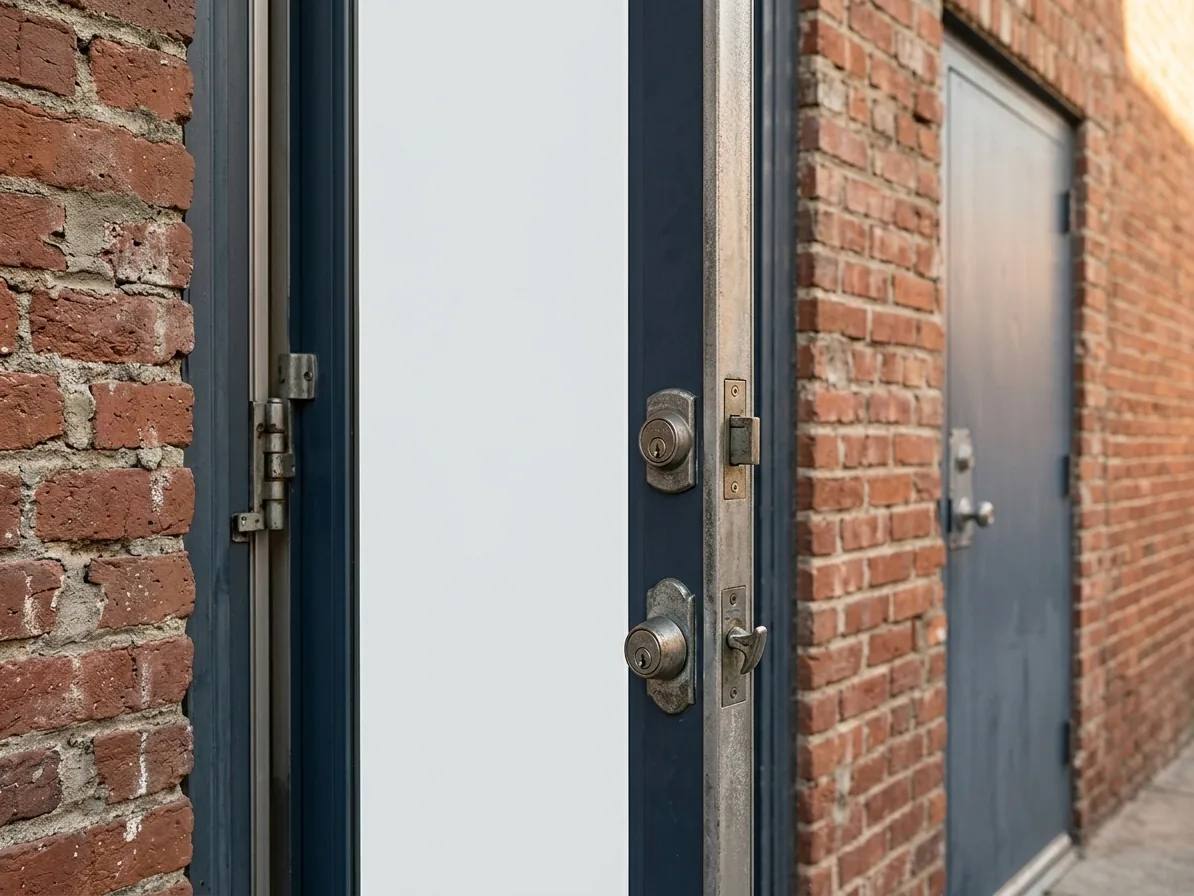
Where the frame, the closer, and the lock work against each other
Escondido reads as one city and behaves like four. The blocks around Grand Avenue are older downtown retail, masonry shells that were fitted with aluminum storefront entries decades after they were built.
Off the industrial streets near Mission and along the 78 you get tilt-up concrete and pre-engineered metal, all hollow metal man doors and dock traffic. Near the hospital corridor and the civic buildings the hardware gets quieter and the finish expectations get higher. Past the edge of the grid, the buildings turn agricultural.
We work the door, the frame, and the hardware, not just the cylinder. That distinction matters more inland than it does in the newer parts of the county, because a large share of Escondido's commercial stock is old enough that the frame, the closer, and the lock are all working against each other. A lock that will not turn is often a door that has dropped on its hinges or pivots and is now binding in the opening.
Most of this work is scheduled, quoted, and repeatable: a rekey after a termination, a closer replaced before an inspection, a pair of doors brought back into adjustment before a lease starts. We would rather set the building up on an account than sell you one emergency at a time.
What actually fails on these buildings
Most inland service calls trace back to age, traffic, and heat cycling rather than to a break-in.
The hardware itself is often fine. The geometry around it is not. When a door stops latching, the honest order of operations is to check how the door sits in the frame first, then the latch, then the strike. Chasing it in the other direction is how a building ends up with three new strikes and the same complaint.
- Storefront doors that stopped latching because the pivot wore and the deadlatch plunger no longer lands on the strike face
- Closers weeping oil, or replaced with the wrong size and never adjusted for backcheck, so the door slams and beats the frame
- Surface vertical rods on pairs where the top latch never engages and the inactive leaf floats in the opening
- Exit devices dogged down for the business day and never undogged at close, so the door sits unlatched overnight, and mechanical dogging found on labeled fire doors where it does not belong
- Mortise locks with worn hubs and tired lever return springs, where the lever droops and the latch only retracts partway
- Frames spread by a pry attempt, where a new strike alone will not bring the gap back
Aluminum storefront doors on the older retail blocks
Downtown Escondido entries are mostly narrow stile aluminum, and the stile face is only a couple of inches wide. That settles the hardware question before anyone has an opinion about it.
A cylindrical lockset wants a large cross bore through the face of the door and a standard 2-3/8 or 2-3/4 inch backset, and a narrow stile has room for neither. What fits is Adams Rite style hardware sized to the door: a short backset deadlatch in a narrow stile, a longer backset only where the door is medium or wide stile, and a mortise cylinder with the correct cam and tailpiece for the lock body it actually drives.
We keep the repair inside what the door can carry. That means deadlatch replacement, a correct strike with jamb reinforcement behind it, pivot and top jamb work, threshold and sweep where the bottom has gone, and closer templating so the door closes and latches on its own instead of being pulled shut by hand.
Two things get confused often enough to be worth saying plainly. A deadlatch is not a deadbolt: it keeps a credit card out of the latch, it does not add throw. And if the door has dropped far enough that the latch no longer meets the strike, moving the strike is a few weeks of relief, not a repair.
Getting an older multi-tenant building back on one key system
Buildings that have changed hands and changed tenants for a long stretch tend to accumulate keys nobody can account for.
Before quoting a master key system we identify which keyways are present, count cylinders by door and by type, and confirm which doors need to key alike, which need to key different, and which belong under the grand master.
A property that has been rekeyed piecemeal usually has cylinders with master pins already stacked in them that match no chart anyone still has. Some of those can be repinned into the new system and some are cheaper to replace than to salvage, and that call gets made cylinder by cylinder rather than by assumption.
Where key control is the real problem, a restricted keyway makes duplication traceable and keeps a departing tenant's key from circulating. It costs more per cylinder than a standard keyway. Whether that is worth it depends on turnover, tenant mix, and how many people currently hold a building key. Where turnover is heavy, an interchangeable core system is worth pricing too, since a rekey becomes a core swap instead of a full service call at every door.
Scheduling, quotes, and account setup
Almost none of this work needs to be an emergency. Send door counts, photos of the existing hardware, and photos of the frame and the hinge side, and the quote gets closer to accurate the first time.
If you manage more than one property, an account is worth setting up. Vendor paperwork, purchase orders, billing terms, and tenant coordination get handled once at the account level instead of being renegotiated on every work order.
Services we run in Escondido
Escondido sends us Grand Avenue storefront entries, hollow metal man doors off the 78, readers on main entries, and rekeys where nobody kept a key chart.
Nearby
Poway is the next inland stop south of Escondido, Carlsbad is out the 78 toward the coast, and Kearny Mesa is the central county's industrial district.