Door and Lock Work for San Diego Hotels and Short Term Rentals
Commercial Lock & Door Co. services San Diego County hotels, motels, and short term rentals: guest room locks and override cylinders, back of house master keying and access control, corridor and stair exit devices, closers, and pool gates.
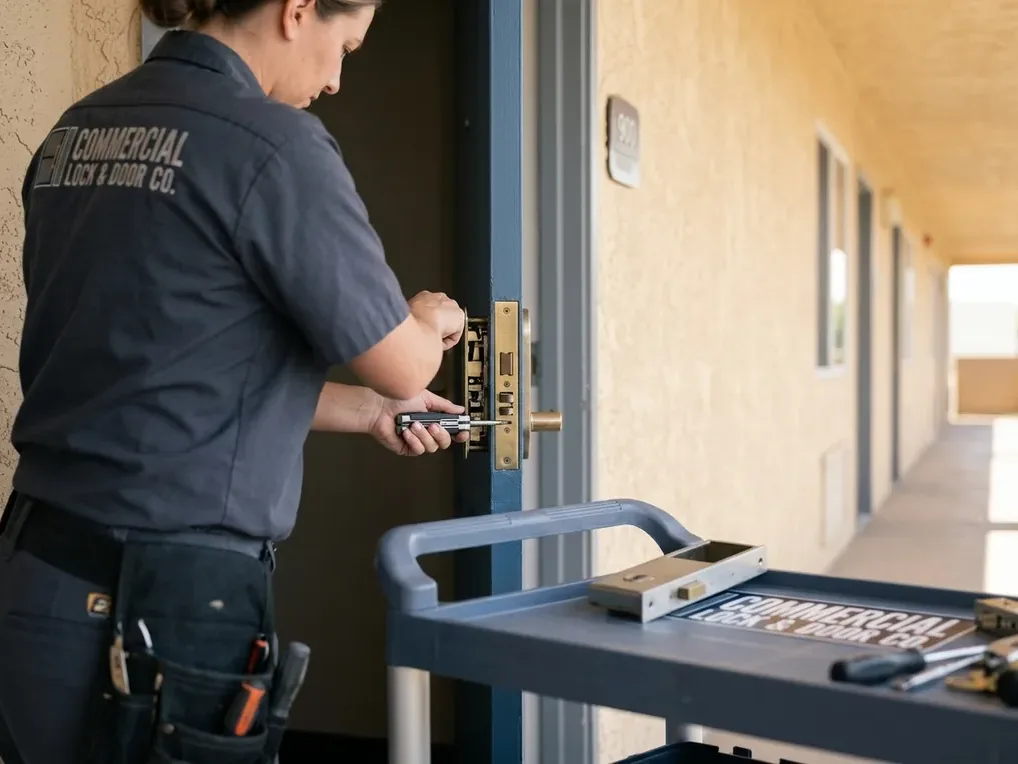
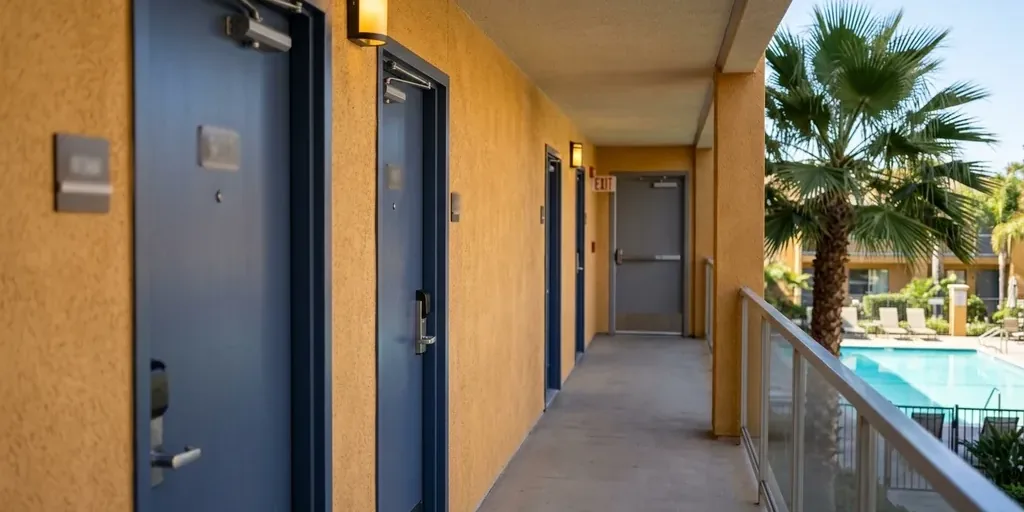
Every door is a security boundary and an exit path
In a hotel, almost every door is both a security boundary and an egress path. Guest room doors, connecting doors, stair towers, corridor exits, linen and laundry, mechanical and electrical rooms, the pool gate.
When one of those doors stops working correctly, it becomes a room out of service, a guest complaint, or a finding on an inspection.
Commercial Lock & Door works all of it across San Diego County. We are a commercial locksmith, a door installation contractor, and an access control installer, not a guest room card platform vendor. We design and install access control for back of house and building entries, keep the doors, latches, strikes, closers, cylinders, and exit devices every system depends on working, and run the keyed half of the building that no card ever touches.
The same work scales down for short term rental operators running units in condo buildings, small motels along the coast, and boutique properties near the freeway corridors. Fewer doors, same hardware, same problems.
What actually goes wrong in these buildings
Most of these calls from hotels and rental operators trace back to a sagging door, an override key nobody tracks, or salt air on exposed corridor hardware.
Most guest room lock failures are mechanical. The door has dropped on its hinges, the latch is dragging on the strike lip, and the motor stalls trying to throw a bolt into binding metal. The low battery warning is a symptom. We check hinge screw purchase into the frame, door gap and handing, latch throw and deadlatch plunger engagement, then correct the strike or rebuild the lock body. Fixing the door costs less than replacing electronics that were never the problem.
Every electronic guest room lock has a mechanical override cylinder, and on a lot of properties that cylinder is still on the builder keyway it shipped with, with copies floating from two management companies back. We pull a cylinder, identify the keyway and bitting, and rebuild the override side as a controlled system on a restricted keyway with a real key record. That is the key that matters when a board goes dead or a guest does not answer.
Housekeeping needs linen, laundry, and storage. It does not need the electrical room, the roof hatch, the liquor cage, or the pool equipment room. We build a master key system around how the property is actually run: a change key per opening, section masters by floor and by department, and a grand master that lives with two people. Pin stacks get built with room for a future key change so the system can be rotated later without pulling every cylinder.
On short term rental doors we usually find a residential keypad deadbolt mounted above a passage lever, which means the unit is only locked if the guest threw the bolt. We replace that with a commercial grade keypad or keyed lever carrying a deadlatch, so the door secures the moment it closes, and set it up with separate guest, cleaner, and management codes so you can rotate one without disturbing the others.
Salt air is hard on exposed openings. Plated finishes blister, closer arms stiffen, exit device springs and latch tails corrode, and hinge screws rust into the frame. On exterior corridors, breezeways, and rooftop doors we specify satin stainless trim, corrosion resistant exit devices and fasteners, and closers sized for wind exposure with the backcheck set so a gust cannot drive the door past its stop.
A pool gate has to swing away from the water, close on its own from any position, and latch without help. When the self closing hinges weaken or the post shifts, the gate rests almost closed and the latch never catches. We reset or replace the hinges and latch and check the gate square. Then we look at why it was being propped, which is usually a key or code problem on the equipment room or towel closet beside it.
Guest room doors and connecting doors
Guest room entry doors are usually labeled fire doors hung in a rated frame with a closer, and the lock is either a mortise body with an integrated deadbolt or a cylindrical lock with a separate bolt. That difference decides the repair.
A mortise guest room lock is serviceable: latch, deadbolt, hub, and spring cage are parts, and the cylinder can be pinned into your system. A worn cylindrical lock on a high traffic door is usually replaced with a Grade 1 unit.
Connecting door pairs generate more complaints than any other opening. Each leaf carries its own deadbolt, and when the doors settle or the strikes shift, the bolt hits the lip instead of the pocket and the guest hears the room next door. We reset the strikes, verify bolt throw into the frame and the astragal, and confirm both leaves latch under closer pressure rather than by hand.
- Mortise and cylindrical guest room lock bodies, latches, and strikes
- Mechanical override cylinders pinned into your key system
- Closers templated and adjusted for sweep, latch speed, and backcheck
- Hinge repair, frame reinforcement, and strike alignment on sagging doors
- Connecting door deadbolts and astragals
- Lever trim on accessible rooms
Back of house master keying and key control
Key control is what separates a property that absorbs staff turnover from one that panics at every departure. Restricted keyways matter here more than in most buildings.
On a standard keyway, anyone holding a key can have it copied at a hardware store. A restricted keyway means blanks are controlled and duplication runs through the key record, which stays with us and with you.
When a master goes missing, the design of the system decides the size of the problem. A property where one key opened everything needs a full rekey. A property with section masters loses one floor or one department, and we rekey that group and reissue against a signed log. That is the argument for designing the system correctly before you need it.
Exterior corridors, stairs, and gates
San Diego properties run a lot of exterior circulation: open corridors, exterior stairs, breezeways, service yards, and gates.
On stair and corridor exits we check the things an inspector checks. The door latches on its own. The device unlatches in a single motion from the egress side. Dogging is set appropriately, and nobody has added a chain, a hasp, or a secondary lock to stop the door from being propped.
We work rim devices, mortise exit devices, and surface vertical rods, and we have opinions about where each belongs. Vertical rods on an exterior pair take abuse and go out of adjustment, so on windy exposures we would rather fix the rods and set the coordinator correctly than watch the pair get chained shut.
Short term rentals and small operators
For rental operators, the unit door is only half the job. The openings that actually break turnover are the building ones: the lobby storefront door, the garage pedestrian gate, the mail and trash rooms, and the elevator lobby.
Those openings are usually HOA or building hardware with their own approval process, and we are used to having that conversation before anyone touches a cylinder. Where the building wants tighter control at the lobby door, we also install video intercoms and entry systems so a guest can be verified and buzzed in without a shared code.
Storefront and aluminum entry doors deserve a note of their own. They take a narrow stile lock or a rim device on a mortise cylinder, not a residential deadbolt, and the pivot or closer arrangement is what fails first. Drilling a storefront door for the wrong hardware is expensive to undo.
How hospitality accounts work with us
Hospitality work has to fit around occupancy. We scope by floor or by wing, sequence rooms so the fewest are out at once, and take low occupancy windows when the calendar allows.
Changing a lock body does not take a room out for the day, and we will tell you plainly which items need the door out of service and which do not.
Everything is quoted per opening before work starts, itemized so hardware reads separate from labor. We work with purchase orders, vendor onboarding paperwork, and the billing terms your management company runs on. Most properties start with one problem opening and end up with a standing arrangement for turnover work, key cutting, and closer service.
- Guest room and corridor doors are commonly labeled fire doors. Field work has to stay within what the listing allows. Cutting a new lock prep, adding a surface bolt, or removing a closer from a rated door can void the label, and a rated door that will not latch on its own is not doing its job.
- Egress governs the inside of every door a guest or employee uses to leave. Unlatching should take one motion, with no key, tool, or special knowledge required from the egress side. Auxiliary deadbolts and night latches on guest room doors should release along with the lever rather than requiring a second operation.
- Accessible guest rooms and public doors need hardware operable without tight grasping, pinching, or twisting of the wrist, mounted within the reachable height range. Opening force and closer sweep timing matter as much as the lever shape.
- Pool and spa enclosure gates are expected to be self closing and self latching, swinging away from the water, with the latch release positioned so it is not reachable by a small child. A gate that needs a shove to catch is a failed gate.
General principles only. Your authority having jurisdiction has the final say on any specific opening.
What we are usually called out for
Hotel and rental calls split three ways: guest room override cylinders and back of house masters, electronic entry at staff doors and lobbies, and corridor exit devices.
Master Key Systems
Commercial keying design for San Diego buildings
DetailsAccess Control Systems
The whole system, credential to latch
DetailsMortise Locks
Mortise lock bodies, trim, and function changes
DetailsKeypad Locks and Keyless Entry
Standalone keypad and fob locks. No server, no subscription.
DetailsVideo Intercoms & Entry Systems
See the visitor, then decide if the door opens
DetailsPanic Bars and Exit Devices
Commercial exit hardware, San Diego County
Details