Locksmith and Door Work for San Diego Property Managers and HOAs
Door and lock service for property managers and HOAs covers turnover rekeys, master key records, common area hardware, and fire door repairs. Commercial Lock & Door Co. runs multi-property San Diego County portfolios on one account with per-opening quotes.
Several hundred doors and no shared paperwork
You are not managing one door. You are managing several hundred of them, spread across addresses that share no keyway, no hardware standard, and no paperwork.
Most were installed by whoever was available at the time. We work with San Diego management companies and HOA boards on the whole set: turnover rekeys, common area and amenity hardware, key records that survive a change in staff, and billing your accounting system can actually process.
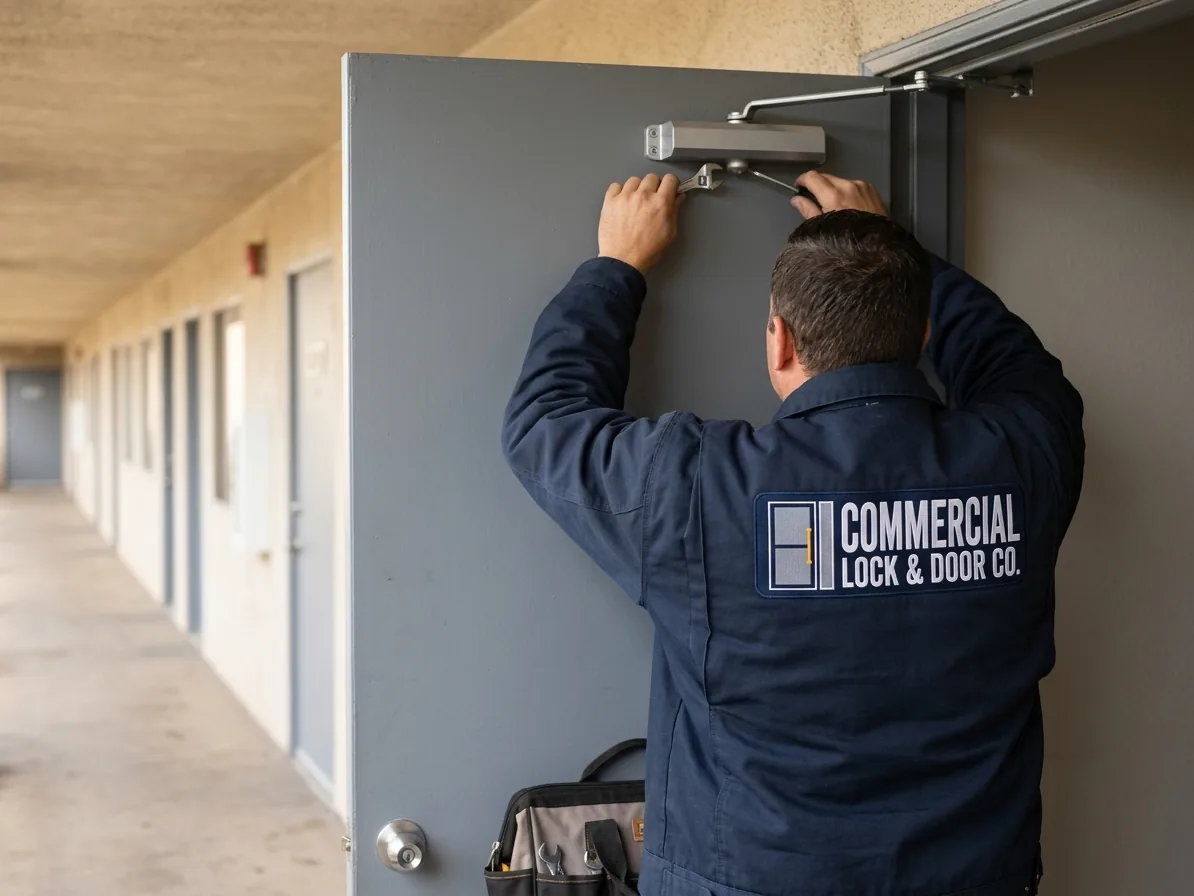
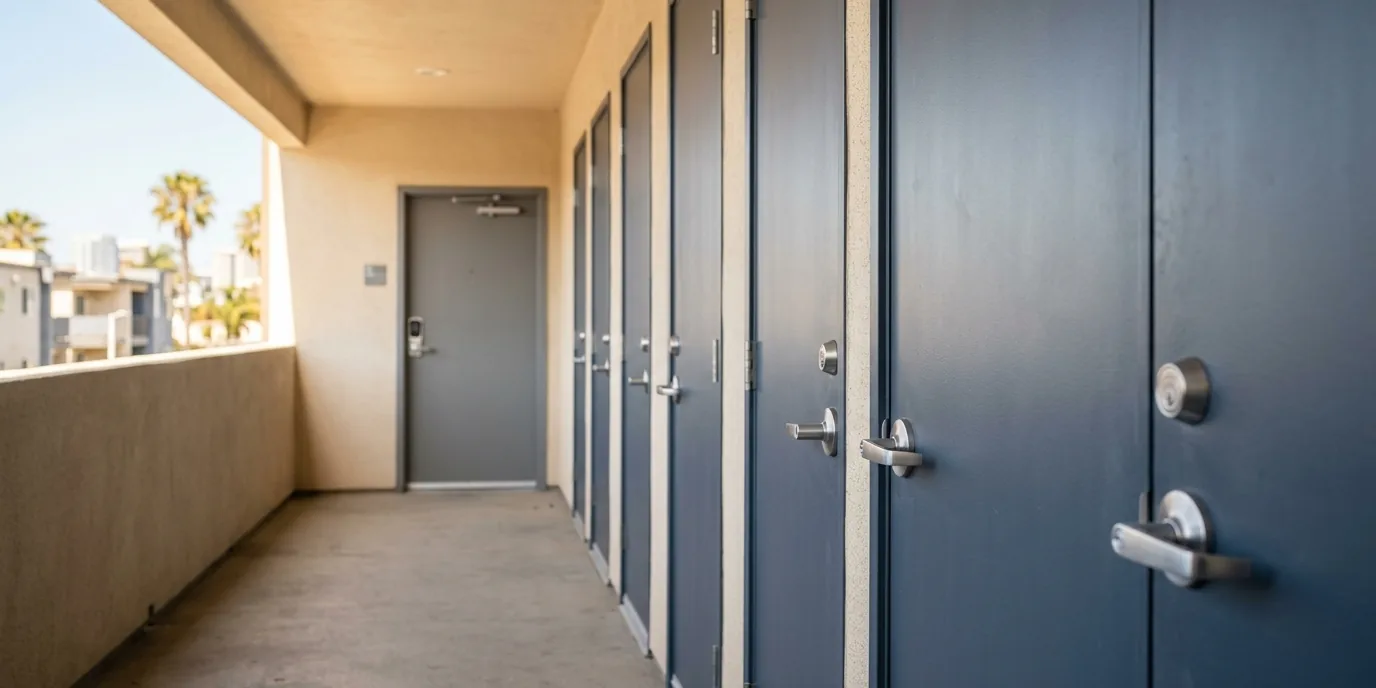
The work splits in two. The routine half is turnover and key control, and it should run on a schedule rather than on a panicked Friday call. The other half is the doors themselves. Corridor and stairwell openings, mailrooms, pool and gym gates, storefront ground floors, trash enclosures, roof hatches. Those fail on cycle count, not on lease dates, and they are where a small repair postponed turns into a door replacement.
Everything is quoted per opening before we dispatch on anything beyond routine work. Set up an account once and the next request is a unit number and a date.
What actually goes wrong in these buildings
Nearly every portfolio walk turns up the same list: mismatched keyways, a departed tech's key ring, worn mailroom doors, and fob readers on doors that never latch.
This is the normal starting point, not a failure. We inventory what is actually in the cylinders, property by property, then set a target: one keyway family across the portfolio, with a separate master hierarchy per property so no key crosses an address line. Conversion happens at turnover rather than all at once. Each unit that goes vacant gets rekeyed into the new system, and after a couple of leasing cycles the cabinet matches the schedule on paper. We keep the pinning schedule and bitting list on file, so the next request does not start with another site survey.
The problem is the hierarchy, not the person. Maintenance should carry a sub-master that opens what maintenance needs and nothing more, and outside vendors should carry a device-level key for one thing: laundry, trash enclosure, irrigation controller, electrical room. When a ring walks off, we rotate the affected level instead of rekeying every cylinder in the building. Moving that property to a restricted keyway makes the next departure cheaper, because blanks are not sold over a hardware store counter and duplication runs through a named authorization list you control.
High cycle openings deserve Grade 1. A package room door that gets pulled on all day will chew through a Grade 2 cylindrical lockset and a builder grade closer, and each failure arrives as a resident complaint. We spec Grade 1 lever or mortise hardware, a proper deadlatch where the door is aluminum storefront so the latch cannot be carded, and a closer sized to the door and templated so the backcheck catches before the door swings into the wall. On the gang mailbox itself, the arrow lock belongs to the Postal Service, so we work the door around it and leave that cylinder alone.
Credential systems get blamed for hardware problems. Usually the closer is not pulling the door all the way into the keeper, the strike is misaligned by a fraction, the door position switch has drifted out of range on a sagging leaf, or the request to exit device is releasing early. There is also a design question that gets skipped: fail-safe or fail-secure, and what happens at that opening on a power loss or an alarm. We install and service electric strikes, electrified levers, and the exit devices they sit on, and we design and install complete access control systems when a property is ready to own one: fob and mobile-credential readers, keypads, cloud-managed controllers, and video intercoms at the lobby. If your building already runs on an integrator platform, we are just as glad to repair the opening it depends on.
Labeled fire doors have to self-close and positively latch, and the label assumes the leaf and frame are still in the condition they were listed in. Drilling a new lock prep in the field, patching an old cylinder hole with filler, or through-bolting a closer where the listing does not allow it can void that label, and an inspector reads the door, not the invoice. We adjust closers for latch check and sweep, replace failed exit device latches, and tell you plainly when an opening needs a new labeled leaf rather than another patch. Chains and wedges come off and get replaced with hardware that actually holds the door open legally.
One account covers the portfolio. Work orders reference the address and unit, quotes come back itemized per opening so a manager or a board can approve a line rather than a lump sum, PO numbers land on the invoice, and billing consolidates by property or by portfolio depending on how your owners are structured. If your vendor onboarding portal wants documents uploaded before anyone works on site, send the link and we work through it. Scheduling gets batched by property so one trip clears the whole turnover list instead of one unit at a time.
Key control that outlives your staff
Most portfolios do not have a key problem. They have a records problem.
When the person who knew which key opened which door moves on, the building loses its map, and the next rekey becomes guesswork the owner pays for. A master key system is only worth what its documentation is worth.
We build the hierarchy around how the property is actually staffed and then keep the paperwork. If you leave us tomorrow, the schedule goes with you.
- One keyway family across the portfolio, with a separate master per property so keys do not cross addresses
- Change key per unit, building master for management, sub-masters for maintenance and for individual vendors
- Restricted keyways where duplication control matters more than the cost of a blank
- Small format interchangeable cores on properties with heavy turnover, so onsite staff can swap a core with a control key
- Pinning schedules and bitting lists kept on file and handed over on request
Common areas, amenities, and the doors nobody is assigned to
Unit doors get attention because residents complain. The doors that quietly cost money are the ones with no name on them.
Pool and spa gates that have to self-close and self-latch every time. Clubhouse and gym doors on pairs with surface vertical rods that fall out of adjustment. Trash enclosures, bike rooms, roof hatches, electrical and IDF rooms. Ground floor retail bays in mixed-use buildings running aluminum storefront with a deadlatch and a pivot that has worn.
Coastal properties add corrosion to the list. Exterior cylinders, gate latches, and exposed exit device trim near the water need finish and material selected for that, not whatever the last vendor had on the truck.
We walk the property once, list every opening with what is on it and what condition it is in, and quote the items you want to move on now separately from the ones that can wait for next fiscal year.
Turnover and terminations, handled at portfolio scale
Turnover rekeying is volume work, and it should be priced and scheduled like volume work. Give us the unit list and the access windows and we run them in one pass per property.
Where a property is on interchangeable cores, turnover becomes a core swap your own staff can do in under a minute, and we keep the cores rotating on a schedule so no bitting comes back too soon.
Terminations and departing vendors are the same job with more urgency and a narrower scope. The right move is almost never rekeying an entire property. It is identifying which level of the hierarchy that person held and rotating that level, then reissuing on a signed key log so the next audit has an answer.
Working with management companies and HOA boards
Boards meet on a cycle and vote on documents. Managers answer to owners who want to know what a number covers.
We write quotes to survive both. Each opening is a line, each line says what hardware and what labor, and deferred items sit in a separate section so a board can approve the safety work now and calendar the rest.
Tenant coordination is part of the job. We give notice windows that fit your entry requirements, we work around business hours in occupied commercial space, and we do not leave a door unsecured between phases of a job.
San Diego portfolios sprawl. If your properties run from Chula Vista up the 5 to Carlsbad, or inland along the 8 and the 15, that is still one account and one point of contact.
- Doors in a path of egress must unlatch with a single motion from the inside, without a key, a tool, or special knowledge. A thumbturn deadbolt added above a lever creates a second motion and is one of the most common problems we find in corridors and stair doors.
- Labeled fire doors have to self-close and positively latch. Field modification beyond what the listing allows, including new lock preps, filled holes, and unapproved closer through-bolts, can void the label, and a fire rated exit device must not be dogged open.
- Operable hardware should work without tight grasping, pinching, or twisting the wrist. Levers instead of knobs, closers adjusted for opening force and sweep timing, and thresholds and hardware heights that a resident using a mobility device can actually manage.
- Pool and spa gates in common areas are expected to be self-closing and self-latching with the latch positioned so it cannot be reached casually from the outside. Gate closers and latches wear fast in coastal air and should be checked on a routine schedule, not after an incident.
General principles only. Your authority having jurisdiction has the final say on any specific opening.
What we are usually called out for
Management companies and HOA boards bring us keying and unit turnover first, then lobby intercoms, fob systems, and the closers on corridor doors and pool gates.
Master Key Systems
Commercial keying design for San Diego buildings
DetailsTenant Turnover Lock Change
Turnover work for property managers
DetailsCommercial Rekey
Repin the cylinders you already own
DetailsAccess Control Systems
The whole system, credential to latch
DetailsVideo Intercoms & Entry Systems
See the visitor, then decide if the door opens
DetailsDoor Closers
Surface, concealed, and floor closers
Details