Door and Lock Work for San Diego Warehouses and Distribution Centers
Commercial Lock & Door Co. services warehouse and distribution center doors across San Diego County: dock-side man doors, exit devices, hollow metal repair, yard gate hardware, and interchangeable core key systems that survive shift change.
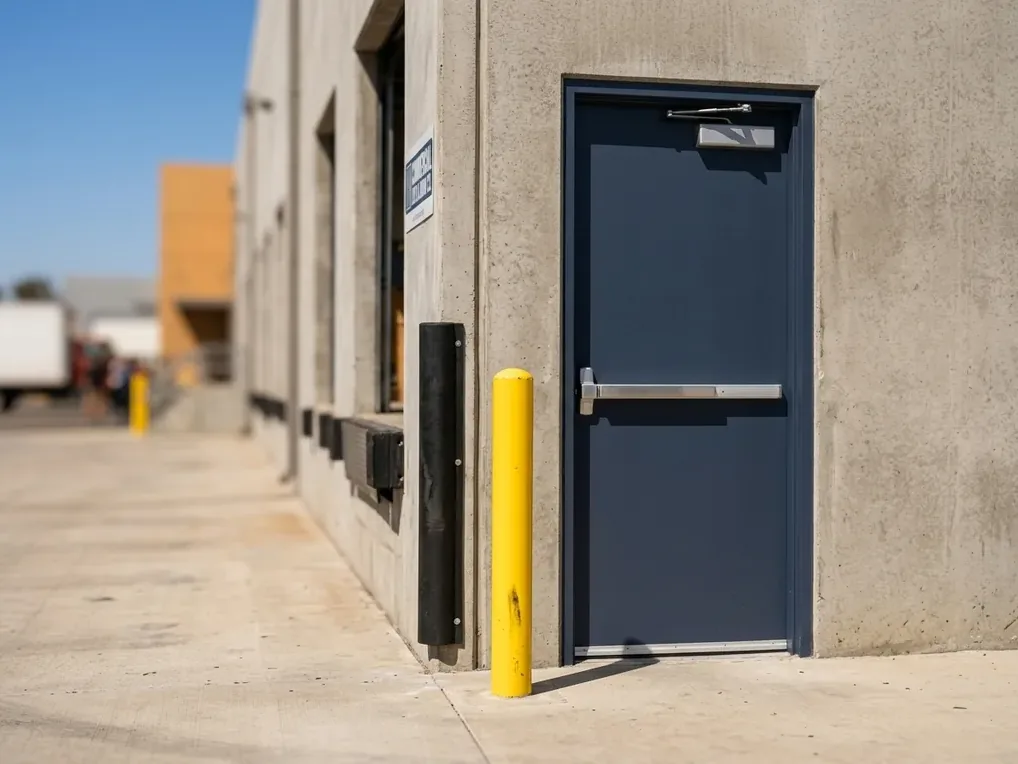
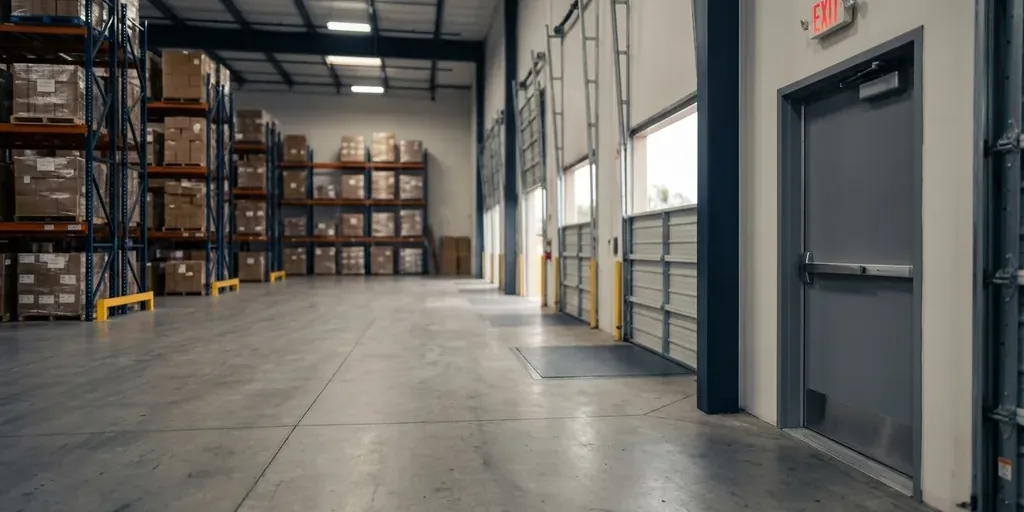
One key ring, two very different sets of doors
A distribution building has two door problems at once. The office side has a few aluminum storefront doors that see office traffic.
The warehouse side has hollow metal man doors next to the dock positions, and those doors take a pallet jack, a hand truck, or a shoulder every few minutes for as long as the shift runs. Same building, same key ring, completely different hardware and completely different failure rates.
We work the door side of that building. Exit devices, closers, hollow metal repair, mortise and cylindrical locks, yard gate hardware, and the key system that holds it together. If you run a facility in Otay Mesa, Miramar, or anywhere else in San Diego County, we can walk the property, number the openings, and quote the work as a list you can hand to purchasing.
What actually goes wrong in these buildings
The same failures turn up on nearly every warehouse walk, from a chewed-out strike in a tilt-up frame to a chain hung on the back exit door.
Replacing a frame set in a tilt-up panel means concrete work, and it is rarely the first move. The leaf is usually the casualty. We hang a new hollow metal leaf in the existing frame, weld and re-prep the frame face where the strike has been chewed out, and add an armor plate on the push side. If the hinge screws have stripped the frame reinforcement, a continuous geared hinge spreads the load instead of putting it all on three butt hinges.
A dock-side man door cycles all shift, every shift, and Grade 2 hardware does not survive that duty. We specify Grade 1 ANSI/BHMA rim devices with a matched strike, and we check the whole opening first, because a device that will not latch is usually being fought by a sagging hinge, a dragging closer, or a strike that has migrated. Many worn devices take a factory rebuild kit instead of a full replacement, and we will tell you which ones.
That is a key system problem, not a lock problem. Small format interchangeable cores let you pull a core and drop in a new one in about a minute with a control key, so a lost key on second shift does not turn into a weekend of lock changes. Pair that with a restricted keyway so keys cannot be copied at a hardware store, a written key record, and a small stock of pinned spare cores kept in your cabinet.
Padlocks are hardware too, and they belong on the same system as the building. We key yard locks alike or bring them onto the master, use shrouded shackle bodies where a gate is exposed, and weld in gate boxes so a swing gate carries a real cylinder instead of a chain and a hasp. Out on the apron and closer to the water, brass and stainless bodies hold up where plated steel rusts shut.
That fix creates a worse problem than the one it solved. An exit door has to open from the inside without a key, a tool, or special knowledge. The right hardware does both jobs at once: a rim exit device that is secure outside and free inside, and a deadlatch with a properly aligned strike so the latch cannot be carded. Where staff prop the door for airflow, a local alarm device or a door position switch means you find out about it.
Bottom rods sit at floor level in a building full of grit, water, and pallet debris, and the floor strike fills in. On non-rated pairs we convert to less bottom rod, which removes the bottom rod and floor strike entirely and lets the top latch carry the door. On rated pairs the conversion has to use hardware listed with an auxiliary fire pin. Rods bent by equipment contact get replaced, not straightened.
Aluminum storefront out front, hollow metal at the dock
The front of a distribution building is usually aluminum storefront: narrow stile doors, a deadlatch or narrow stile mortise lock, a closer, and a threshold that gets walked on all day.
The back is hollow metal in a welded or knock-down frame, running cylindrical and mortise locks, rim and vertical rod exit devices, and closers fighting wind off the truck court.
Those two sides take different parts and different technique, and they almost always need to end up on one key system. We handle both. We would rather number your openings once and keep the record than guess at what is hanging on door 14 the next time you call.
- Hollow metal man doors, frames, and weld repairs beside dock positions
- Rim, mortise, and vertical rod exit devices, including rebuilds and dogging
- Overhead closers sized and templated for the door, with backcheck set so a gust does not throw the leaf into the wall
- Grade 1 cylindrical and mortise locks for high cycle openings
- Aluminum storefront deadlatches, pivots, and thresholds at the office entry
- Gate boxes, weldable hardware, and keyed alike padlock programs for the yard
- Electric strikes and electrified levers on the doors your reader already controls
Otay Mesa, Miramar, and the corridors between
Otay Mesa moves on the border crossing schedule. The buildings there run newer tilt-up, deep truck courts, secured yards, and operations that do not stop at five.
The Miramar Road corridor is a mix: older tilt-ups whose hollow metal has been repaired more than once, sitting next to newer distribution space off I-15 and SR-52. Kearny Mesa, the industrial pockets in Chula Vista, El Cajon, and Escondido all run their own version of the same building.
The environment matters more than people expect. Yard dust works into cylinders and into exit device mechanisms. Air off the water rusts plated padlocks and hinge pins. A door on a west facing apron catches wind that a closer with no working backcheck will not survive. We spec parts with that in mind instead of putting a builder grade closer back on a door that already ate one.
Key control that survives shift change
Most warehouse key problems trace back to a system that was pinned once, years ago, and then patched.
A door got added. One lock got rekeyed to something else. Now the shift lead carries nine keys and the master will not open the IT closet. Rebuilding that is straightforward master key work: chart what exists, decide what genuinely needs to be separated, and pin it deliberately.
A warehouse system usually wants a few clean levels. A building master for facilities and the plant manager. Separate change keys for shipping, receiving, the tool crib, maintenance, and the office. A restricted keyway at the top so the master cannot be duplicated. Where an opening does not need to be on the key system at all, a keypad lock with individual user codes takes a key out of circulation entirely, and a code can be pulled the moment an assignment ends. The key schedule we leave behind is half the value, because the next person in your seat should not have to guess.
Quoting, scheduling, and setting up an account
Most of this work is quoted from a walk. We go opening by opening, note what is hanging on each door and what is failing, and come back with a line item list.
You decide what gets done now and what waits for the next budget cycle. There is no flat price for commercial door work, because a door that needs a strike adjusted and a door that needs a new leaf, hinges, closer, and device are not the same job.
Scheduling is usually the harder half. Docks run, trailers stage, and there is a window where an opening can be out of service and a window where it cannot. Tell us the shift pattern and we plan around it, including after hours. If your vendor onboarding needs paperwork, a purchase order, or a specific check in at the guard shack, send it with the quote request so nothing stalls at the gate. One walk usually turns into a standing relationship: hardware on file, openings numbered, spare cores in your cabinet, and a call that starts with a door number instead of a description.
- Doors in the path of egress must open from the inside without a key, a tool, special knowledge, or unusual effort. Added slide bolts, hasps, chains, and key operated deadbolts on an exit door are a problem no matter how the space is used.
- Fire rated openings must be self-closing and positive latching, so wedges and kick-down holders defeat them. Field modification beyond what the door and hardware listings allow voids the label, and the label itself must stay legible and unpainted. Fire exit hardware has no mechanical dogging.
- On accessible routes, operable hardware should not require tight grasping, pinching, or twisting of the wrist. Levers or push and pull hardware, mounting height inside the reach range, and opening force kept as low as reliable latching allows.
- Rated openings and egress hardware are subject to periodic inspection and record keeping. Keeping a hardware schedule and a key schedule per opening makes that far less painful than reconstructing it later.
General principles only. Your authority having jurisdiction has the final say on any specific opening.
What we are usually called out for
Worn exit devices and beaten hollow metal leaves at the dock are the first call from most facilities, and master keying and access control usually follow.
Panic Bars and Exit Devices
Commercial exit hardware, San Diego County
DetailsHollow Metal Doors & Frames
Steel doors and frames, sized to the wall and the abuse
DetailsAccess Control Systems
The whole system, credential to latch
DetailsMaster Key Systems
Commercial keying design for San Diego buildings
DetailsDoor Closers
Surface, concealed, and floor closers
DetailsCommercial Door Lock Repair
Fix the opening, not just the lockset
Details